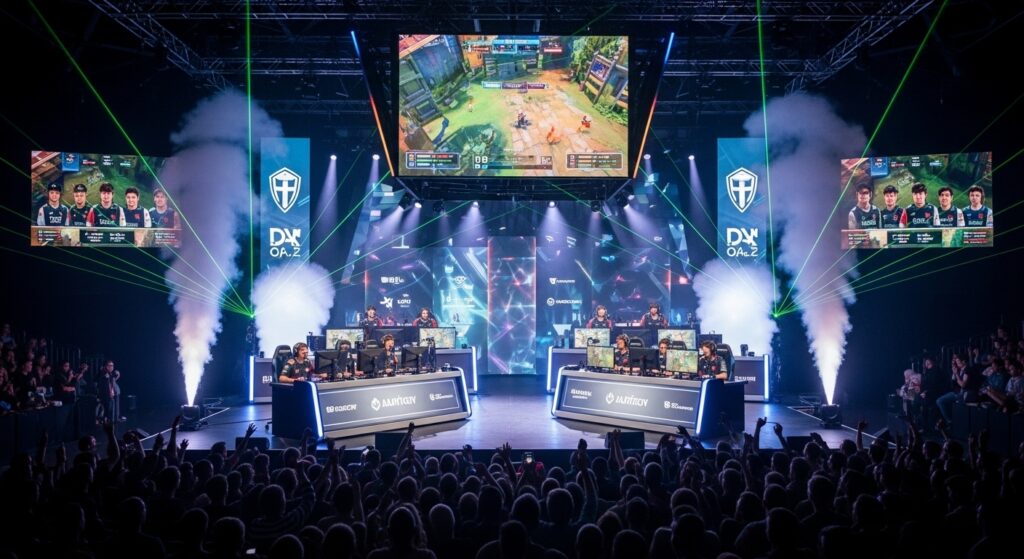
Esports, short for “electronic sports,” has evolved from a niche hobby into a multi-billion-dollar global phenomenon. Once considered a pastime for gaming enthusiasts, it now stands as one of the fastest-growing sectors in entertainment, blending athletic competition, strategy, technology, and global fan engagement in ways no one could have predicted a few decades ago.
This blog explores the journey, culture, economy, and future of esports — an industry where digital battles command the same passion and prestige as traditional sports.
The Origins: A Digital Spark
The story of esports begins in the early 1970s, long before fast internet or high-end gaming PCs existed. The first recorded competitive video game event took place at Stanford University in 1972, where students battled in a game called Spacewar! for a one-year subscription to Rolling Stone magazine. It was simple, small, and almost laughable compared to modern standards — but it marked the beginning of organized digital competition.
By the 1980s, arcades became the heartbeat of gaming culture. Titles like Pac-Man, Donkey Kong, and Space Invaders turned everyday players into local legends. Tournaments sponsored by gaming magazines brought the first generation of competitive gamers into the spotlight. The idea of being the best at a video game started to hold real meaning.
The 1990s: The Internet Revolution and LAN Culture
The 1990s were transformative. With the advent of personal computers and the rise of internet connectivity, multiplayer gaming shifted from living rooms to local area network (LAN) parties. Games like Doom, StarCraft, Quake, and Counter-Strike gave birth to the first true esports communities.
LAN events became social gatherings where friends competed face-to-face in dimly lit rooms filled with tangled cables and glowing monitors. The thrill wasn’t just about winning; it was about outsmarting someone sitting right next to you.
One of the most influential titles of that era was StarCraft: Brood War, especially in South Korea. There, it became more than a game — it was a national phenomenon. Internet cafés, known as “PC bangs,” were filled with players training daily. The South Korean government even recognized professional players, setting the stage for the country to become the global epicenter of esports.
2000s: The Birth of Professional Gaming
By the early 2000s, esports matured into a structured, organized industry. This was the decade when the term “professional gamer” gained legitimacy. Major tournaments like the World Cyber Games (WCG), Electronic Sports World Cup (ESWC), and Major League Gaming (MLG) introduced prize pools, sponsorships, and global recognition.
Counter-Strike 1.6, Warcraft III, Halo 2, and Dota began shaping team-based competitive formats. Players started forming clans and organizations that resembled traditional sports teams — complete with captains, coaches, and training regimens.
Meanwhile, South Korea’s StarCraft leagues aired on television, transforming players like Lim “BoxeR” Yo-hwan into celebrities. These gamers earned sponsorships from major corporations, and their matches drew millions of viewers nationwide. Esports was no longer a pastime — it was a profession.
Streaming and Social Media: The Ultimate Game Changer
In the late 2000s and early 2010s, the arrival of streaming platforms such as Twitch, YouTube Gaming, and later Facebook Gaming revolutionized esports forever. For the first time, fans could watch live tournaments, follow their favorite players, and even chat during broadcasts.
Traditional sports rely on networks and expensive rights deals, but esports thrived on accessibility. Anyone could stream, compete, and build an audience. This democratized visibility created new stars overnight.
Games like League of Legends, Dota 2, and Call of Duty exploded in popularity. League of Legends, in particular, changed the global esports landscape with its franchised leagues, annual World Championship, and prize pools that rivaled traditional sports events.
By 2013, Dota 2’s “The International” introduced a new model: crowdfunding prize pools through in-game purchases. Fans directly funded tournaments, and prize money soared to tens of millions of dollars. Esports had entered a new era of community-driven growth.
The Esports Ecosystem: Players, Teams, and Beyond
Today’s esports ecosystem is complex, dynamic, and multi-layered. It’s not just about players sitting in front of screens. It’s a full-fledged industry involving teams, coaches, managers, broadcasters, event organizers, game developers, sponsors, and fans.
1. Players and Teams
Modern esports athletes undergo intense training. They study strategies, review game replays, and maintain strict daily routines to stay at their peak. Teams like FaZe Clan, Team Liquid, T1, Cloud9, and G2 Esports have become household names, with branding power rivaling traditional sports franchises.
A professional team typically includes analysts, nutritionists, and mental health coaches. The physical and psychological demands are immense — reaction times, coordination, and teamwork determine success or failure within milliseconds.
2. Tournament Organizers
Massive organizations like ESL, DreamHack, and BLAST Premier run global tournaments, sometimes in stadiums filled with tens of thousands of fans. These events are broadcast online to millions more, combining the energy of live sports with the spectacle of modern entertainment.
3. Sponsors and Media
Esports attracts major brands from diverse sectors — tech companies like Intel and NVIDIA, beverage giants like Red Bull and Monster, and even automobile manufacturers and banks. Sponsorships provide a crucial financial backbone, allowing teams to grow, players to earn, and events to flourish.
4. Game Developers and Publishers
Developers play a dual role as both content creators and league regulators. Companies like Riot Games (League of Legends), Valve (Dota 2, CS2), and Activision Blizzard (Overwatch, Call of Duty) maintain control over competitive formats, balance patches, and tournament licensing. Their influence ensures consistency — but also gives them tremendous power over the direction of each esport.
The Globalization of Esports
What makes esports truly remarkable is its global reach. While traditional sports often dominate specific regions, esports transcends geography, language, and culture. A Counter-Strike team from Denmark might face one from Brazil; a League of Legends squad from China could battle a European powerhouse in Seoul.
Major tournaments take place in arenas once reserved for concerts and football matches. The League of Legends World Championship has filled venues like the Staples Center in Los Angeles and Beijing’s Bird’s Nest Stadium, drawing millions of online viewers.
Countries like China, the United States, and South Korea are now esports superpowers, but smaller regions like Southeast Asia, Eastern Europe, and Latin America are rapidly catching up. Internet accessibility and mobile gaming are fueling this expansion.
Esports and Education: A New Pathway
The integration of esports into education has been one of the most surprising yet significant developments in recent years. High schools and universities across North America, Europe, and Asia now offer esports scholarships, degrees in game design and esports management, and varsity-level teams.
Institutions recognize the value of esports in developing teamwork, leadership, and strategic thinking. Students who once faced criticism for “playing too many games” now find legitimate career paths — not just as players, but as commentators, event planners, or digital marketers in the esports ecosystem.
The Business of Esports
Behind the flashing lights and roaring crowds lies a sophisticated business model. Esports revenue comes from several primary sources:
- Sponsorships and Advertising: The biggest chunk, often exceeding 40% of total revenue, comes from brands looking to tap into a young, tech-savvy audience.
- Media Rights: Streaming platforms and networks pay for broadcasting rights, similar to traditional sports leagues.
- Merchandising and Ticket Sales: Fans purchase team jerseys, gaming peripherals, and event tickets both online and in person.
- Publisher Fees and Franchising: Some games operate like sports leagues, selling franchise slots for millions of dollars.
The global esports market surpassed a billion dollars annually even before the pandemic, and it continues to expand with the growth of mobile gaming, especially in Asia and Africa.
Challenges and Controversies
Despite its success, esports faces significant hurdles.
1. Player Burnout
Professional gamers often retire young, sometimes before 25. The intense schedules, constant travel, and mental strain lead to burnout and health problems. Many organizations are now introducing wellness programs to address this.
2. Cheating and Integrity
Cheating scandals — whether through software hacks, match-fixing, or illegal betting — have occasionally tarnished esports’ reputation. Organizations have responded by implementing strict anti-cheat technologies and integrity committees.
3. Financial Sustainability
While top-tier organizations thrive, smaller teams struggle with inconsistent income, unstable sponsorships, and high operating costs. As esports matures, sustainable financial models remain a work in progress.
4. Gender Inequality
Esports has historically been male-dominated, but the presence of talented female gamers, commentators, and organizers is growing. Initiatives promoting inclusivity aim to create a more balanced future for the industry.
The Rise of Mobile Esports
Mobile gaming has transformed esports accessibility worldwide. Titles like PUBG Mobile, Mobile Legends: Bang Bang, and Free Fire have become cultural phenomena in regions where expensive PCs and consoles are less common.
Mobile tournaments now attract massive audiences and sponsorships, especially in India, Indonesia, and Brazil. The ease of access — just a smartphone and internet connection — has allowed millions of new players to join the esports revolution.
Esports and Traditional Sports: A Convergence
The line between esports and traditional sports continues to blur. Major sports franchises such as the NBA, NFL, and Premier League have established their own esports divisions.
NBA’s 2K League, FIFA’s eWorld Cup, and Formula 1’s Esports Series are prime examples of this crossover. Athletes themselves, from David Beckham to Shaquille O’Neal, have invested in esports teams, recognizing its massive potential.
This fusion is not just about entertainment — it reflects how the definition of “sports” has evolved in the digital age. Competition, skill, and passion transcend physical boundaries.
The Role of Technology
Esports thrives on technological innovation. Advancements in graphics, processing power, and internet infrastructure have enabled seamless gameplay and broadcast-quality production. Virtual reality (VR) and augmented reality (AR) are beginning to shape immersive viewing experiences.
Artificial intelligence also plays a growing role — from match analytics to predictive commentary and anti-cheat detection. As technology continues to evolve, esports will likely be among the first industries to embrace and showcase these developments to the public.
Esports During and After the Pandemic
The COVID-19 pandemic temporarily halted traditional sports events worldwide, but esports thrived in the digital environment. While stadiums closed, online tournaments boomed. Viewership skyrocketed as people turned to Twitch, YouTube, and other platforms for entertainment.
The pandemic demonstrated the resilience and adaptability of esports. It proved that the digital arena could sustain global competition even when the real world stood still.
Now, post-pandemic, hybrid events have become the norm — combining live audiences with online participation to create a new standard for engagement.
The Cultural Impact
Esports has redefined youth culture. Gamers are no longer isolated individuals; they are part of global communities that share memes, strategies, and live reactions in real time.
Esports stars are influencers, entertainers, and entrepreneurs. They stream, vlog, and interact directly with fans, bridging the gap between celebrity and audience. The language of esports — terms like “GG,” “nerf,” or “meta” — has become part of everyday digital communication.
Music, fashion, and film have also embraced esports aesthetics. Collaborations between game developers, streetwear brands, and artists are common, further merging gaming with mainstream pop culture.
The Future of Esports
As we look ahead, esports shows no signs of slowing down. Several trends are shaping its next chapter:
- Global Expansion: Emerging markets in Africa, the Middle East, and South America are becoming new frontiers for growth.
- Metaverse Integration: Esports may become central to virtual worlds where players, fans, and sponsors interact seamlessly.
- Youth Engagement: Esports will continue to serve as a key entry point for younger audiences into organized competition.
- Professionalization: Expect stricter regulations, health standards, and career longevity programs for players.
- Mainstream Recognition: As generations change, esports will be seen not as an alternative to sports — but as one of its modern pillars.
Conclusion: The Digital Stadium of the Future
From pixelated duels in smoky arcades to million-dollar tournaments in sold-out stadiums, esports has rewritten the history of competition. It combines the excitement of sports, the creativity of entertainment, and the power of technology to connect people worldwide.
Esports is more than just gaming; it’s a celebration of skill, community, and digital evolution. The players may not run across grass fields or swing bats, but their reflexes, strategies, and mental endurance command the same respect as any athlete on the planet.
As technology continues to advance and global audiences grow, one thing is certain: the world of esports is not the future of competition — it is the present.

More Stories
Pixels to Podiums: The Rise of Esports as a Modern Sporting Power
Beyond the Screen: How Esports Is Redefining Competition, Culture, and Careers
Pixels to Glory: The Rise of Esports as a Global Sporting Powerhouse