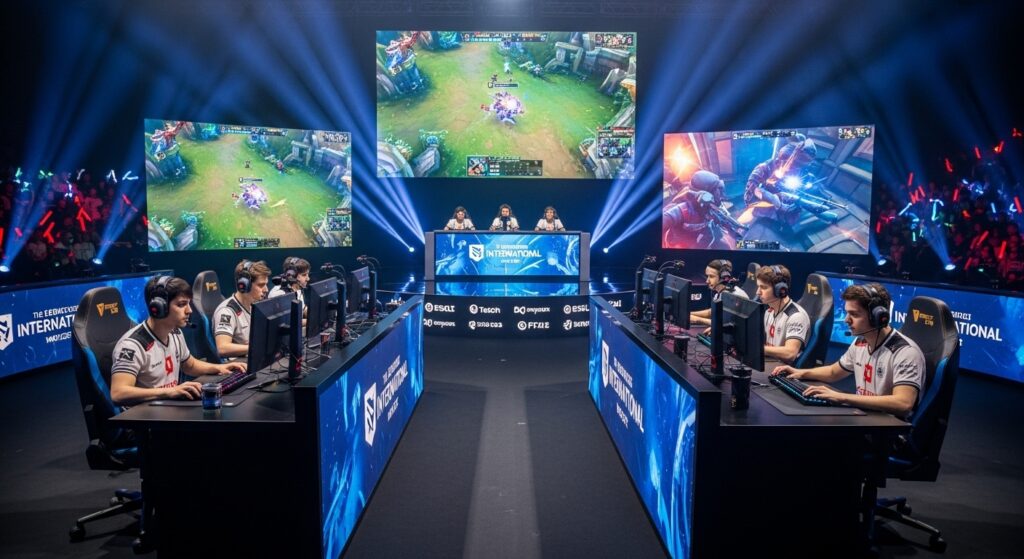
Introduction: The New Era of Competitive Gaming
In the past two decades, one of the most dramatic and unexpected cultural revolutions has unfolded not in stadiums or movie theaters, but on computer screens and gaming consoles around the world. What was once seen as a niche pastime for teenagers and tech enthusiasts has evolved into a global entertainment powerhouse known as esports — the competitive world of professional video gaming.
Esports has transcended the boundaries of simple gaming. It is now a multibillion-dollar industry, complete with professional athletes, coaches, analysts, sponsorships, and even international tournaments watched by millions. It stands shoulder to shoulder with traditional sports in terms of audience engagement, production quality, and financial impact.
The journey of esports is not just about technological advancement but about cultural transformation — how gaming became recognized as a legitimate form of competition, artistry, and community. This blog explores the history, growth, impact, and future of esports, tracing how this digital arena has reshaped entertainment and redefined what it means to be an athlete in the modern world.
The Origins: From Arcades to Early Competitions
The story of esports begins long before the age of streaming platforms and online tournaments. In the early 1980s, video games were primarily played in arcades and at home on simple consoles. Yet, even then, competition was part of the gaming DNA. Titles like Space Invaders, Pac-Man, and Donkey Kong encouraged players to chase high scores, and arcade machines often displayed the initials of top players — the first form of public gaming recognition.
One of the earliest known video game competitions took place in 1980, when Atari organized the Space Invaders Championship in the United States. Over ten thousand participants competed, marking one of the first large-scale gaming events. This tournament planted the seed of what would later become professional esports — a space where skill, reflexes, and strategy determined winners rather than physical strength or endurance.
As technology evolved through the 1990s, gaming moved from arcades to personal computers and consoles. Titles like Street Fighter II, StarCraft, and Quake became breeding grounds for competitive play. LAN parties, where gamers connected their computers locally to compete, were early prototypes of esports tournaments. During this time, gaming began to develop its first true professional players, often revered within small but passionate communities.
The Online Revolution: Connectivity and Global Competition
The rise of the internet in the late 1990s and early 2000s completely transformed the gaming landscape. With broadband connections becoming accessible, players could now compete against opponents worldwide. This shift eliminated geographical barriers and opened the door for online tournaments and leagues.
Games like Counter-Strike, Warcraft III, Halo, and Call of Duty played crucial roles in this era. Online ranking systems and competitive ladders helped players measure their progress, while early streaming platforms and community forums allowed fans to follow their favorite players and teams.
South Korea emerged as a global esports pioneer during this period. The government’s investment in broadband infrastructure and the cultural embrace of gaming created fertile ground for professional competition. Titles like StarCraft: Brood War became national phenomena, and players such as Lim “BoxeR” Yo-Hwan achieved celebrity status comparable to traditional athletes. Television networks in South Korea began broadcasting esports tournaments, signaling the start of gaming as a spectator sport.
The West soon followed, with esports organizations, tournaments, and gaming cafes growing in popularity across North America and Europe. The 2000s saw the formation of professional leagues, including the Cyberathlete Professional League (CPL) and Major League Gaming (MLG), which began to formalize the structure of competitive gaming.
The Golden Age of Esports: Streaming, Sponsorships, and Spectacle
If the early 2000s were about establishing esports, the 2010s were about perfecting it. The explosion of streaming platforms, especially Twitch and YouTube Gaming, transformed how people consumed gaming content. No longer did fans need to attend events in person; they could now watch tournaments live from anywhere in the world, interacting with other fans in real time.
This accessibility helped esports explode in popularity. Games such as League of Legends, Dota 2, Counter-Strike: Global Offensive, and Overwatch drew millions of viewers for their world championships. The League of Legends World Championship began filling arenas once reserved for major concerts or sporting events, such as the Staples Center in Los Angeles and Beijing’s Bird’s Nest Stadium.
Prize pools grew exponentially. Valve’s The International, an annual Dota 2 tournament, broke records with multimillion-dollar jackpots crowdfunded by the gaming community. Corporate sponsorships flooded in from global brands, including energy drink companies, tech giants, and automobile manufacturers.
Esports was no longer underground. It had gone mainstream — complete with commentators, analysts, highlight reels, and celebrity endorsements. The players themselves became icons, building personal brands and fanbases that rivaled those of traditional athletes.
The Esports Ecosystem: Players, Teams, and Organizations
Behind the flashing lights and roaring crowds lies a deeply structured ecosystem. At the heart of it are the players — young, highly skilled competitors who dedicate thousands of hours to mastering their craft. Their training regimens often mirror those of traditional athletes, including daily practice sessions, team scrims, physical workouts, and mental health coaching.
Esports teams have also become professional organizations, managing players, coaches, analysts, and support staff. Teams such as T1, Cloud9, G2 Esports, and Team Liquid have built global fanbases and operate like professional sports franchises, complete with merchandise lines, sponsorship deals, and content creation divisions.
Behind these teams are tournament organizers, game publishers, and broadcasting networks that form the backbone of the industry. Publishers like Riot Games, Blizzard Entertainment, and Valve play crucial roles in maintaining competitive integrity, balancing gameplay, and funding events.
This ecosystem thrives on collaboration. Game developers rely on teams and players to keep their titles relevant, while players depend on publishers for structured competition and exposure. Meanwhile, sponsors and investors fuel the financial engine that keeps the entire system running.
Esports as a Career: Passion Meets Professionalism
One of the most fascinating aspects of esports is how it has transformed gaming from a hobby into a viable career path. Where once parents discouraged excessive gaming, today many recognize the potential for financial and personal success within the esports industry.
Professional players can earn salaries, sponsorships, and tournament winnings that rival traditional athletes. Beyond players, there are careers in broadcasting, coaching, event management, marketing, and game design. Universities around the world now offer esports scholarships, and entire academic programs focus on the business, management, and psychology of competitive gaming.
Yet, like any competitive field, esports also comes with challenges. Players often face intense pressure, burnout, and the physical toll of long hours of play. Reaction times and hand-eye coordination can decline with age, meaning the average professional career is relatively short. However, many former players transition into coaching, streaming, or content creation, maintaining their influence within the community.
Cultural Impact: Esports and Global Youth Identity
Esports has become a defining cultural force for a generation raised on digital interaction. It represents not only competition but community, creativity, and identity. For many young people, esports serves as a shared language — a way to connect across borders, cultures, and languages.
The rise of esports has also shifted perceptions of what it means to be an athlete. Skill, strategy, and teamwork are universal components of sport, and esports emphasizes these through digital rather than physical means. This redefinition of athleticism has sparked debates but also inclusivity, as esports provides opportunities for people who may not fit into traditional sports structures.
Esports has even influenced fashion, music, and entertainment. Collaborations between gaming brands and fashion houses, as well as soundtracks produced by major artists for tournaments, highlight how deeply intertwined gaming has become with mainstream pop culture.
Education and Esports: Building the Future
Recognizing the cultural and economic power of esports, educational institutions have begun integrating it into their curricula. High schools and universities now host their own esports leagues, teaching students teamwork, leadership, and strategic thinking through gaming.
Programs focusing on esports management, production, and design prepare students for careers in the expanding gaming ecosystem. Moreover, esports provides a gateway to learning STEM skills — from computer science and engineering to data analytics and psychology.
This educational embrace also helps legitimize gaming as a productive and intellectually demanding pursuit. It challenges outdated stereotypes and shows how games can foster discipline, communication, and collaboration — qualities valuable both inside and outside the digital arena.
The Business of Esports: Money, Media, and Markets
The commercial success of esports is nothing short of staggering. Industry revenue now reaches billions annually, driven by advertising, media rights, ticket sales, and merchandise. Major corporations have invested heavily in esports, seeing it as a way to reach younger, tech-savvy audiences who consume entertainment online rather than through traditional television.
Media companies have adapted to this trend by broadcasting esports events on major networks and developing dedicated digital platforms. Meanwhile, sponsorship deals from non-endemic brands — those outside the gaming industry — underscore esports’ mainstream acceptance.
Cities around the world are also competing to become esports hubs, building dedicated arenas and hosting large tournaments that attract tourism and media attention. Governments in countries like South Korea, China, and the United States have recognized esports as an official sport, offering support and regulation similar to that provided to traditional athletic organizations.
Challenges Facing Esports
Despite its rapid rise, esports faces significant challenges. The industry’s growth has sometimes outpaced its infrastructure, leading to issues with player burnout, unstable team finances, and inconsistent tournament organization.
Cheating, match-fixing, and integrity concerns occasionally surface, prompting calls for stronger regulation and oversight. Additionally, since esports depends heavily on digital platforms and publishers, questions about data ownership and control persist.
There is also the ongoing debate about inclusivity and diversity. While esports has made strides in welcoming players from around the world, gender imbalance remains a notable issue. Many female players face harassment or are underrepresented in professional leagues, sparking conversations about equality and safety within gaming communities.
Nonetheless, industry leaders and advocacy groups are addressing these concerns through education, stricter codes of conduct, and initiatives promoting diversity and fair play.
The Future of Esports: Innovation and Expansion
The future of esports looks both promising and transformative. As technology advances, so too will the ways people experience and participate in competitive gaming. Virtual reality and augmented reality could introduce new genres of immersive esports, while artificial intelligence might play a role in training and analysis.
Mobile esports are also on the rise, especially in regions like Southeast Asia and Latin America, where mobile gaming has surpassed console and PC gaming in popularity. Titles like PUBG Mobile, Mobile Legends, and Free Fire have created new stars and massive audiences, proving that esports is not limited to high-end gaming setups.
Esports could also become a key part of the metaverse — a shared digital space where users interact through avatars. Imagine virtual arenas filled with spectators from around the world, cheering in real time for their favorite teams. The line between player, viewer, and participant may blur even further.
Moreover, the inclusion of esports in global multi-sport events like the Asian Games and discussions about its potential Olympic inclusion reflect its increasing legitimacy and global appeal.
Conclusion: Esports and the Spirit of Competition
At its core, esports is about the timeless human desire to compete, create, and connect. It reflects the modern era’s fusion of technology, entertainment, and community. From dimly lit arcades to dazzling world championships, esports has evolved into a cultural and economic powerhouse — one that continues to redefine what it means to play, to watch, and to win.
What makes esports remarkable is not only its technological backbone but its spirit. It brings together millions of people who share a passion for strategy, creativity, and collaboration. It celebrates diversity, innovation, and resilience — qualities that define not just gaming, but humanity itself.
As the industry grows, its influence will reach far beyond screens and keyboards. Esports will continue shaping how people learn, interact, and dream. It is not merely a sport for the digital age; it is a mirror of our interconnected world, where competition knows no borders and inspiration can come from a controller, a keyboard, or a mouse.

More Stories
Pixels to Podiums: The Rise of Esports as a Modern Sporting Power
Beyond the Screen: How Esports Is Redefining Competition, Culture, and Careers
Pixels to Glory: The Rise of Esports as a Global Sporting Powerhouse