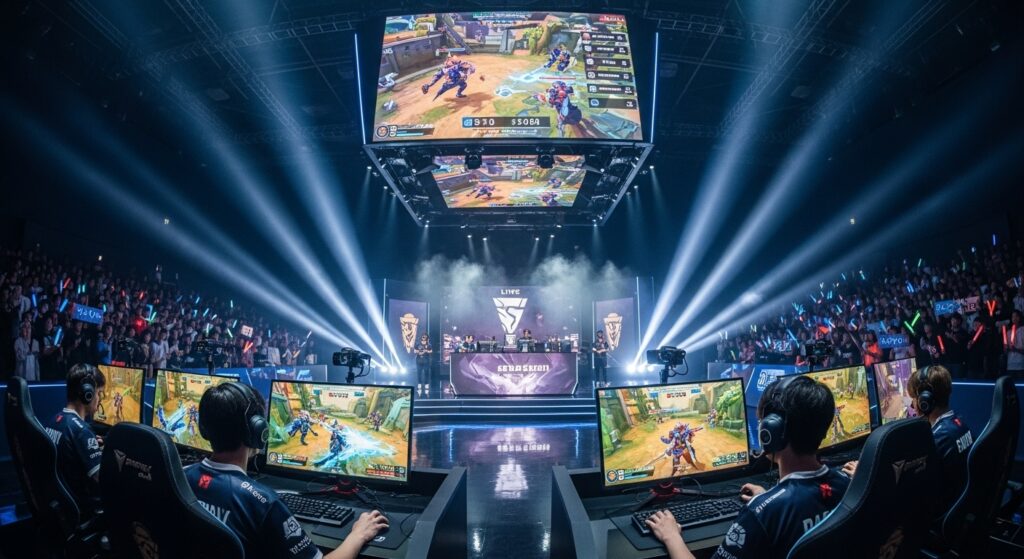
Esports, a term that has gained significant traction in recent years, is a booming industry that has evolved from humble beginnings into a multi-billion-dollar enterprise. This explosive growth has seen video games transcend their traditional role as a form of entertainment to become a legitimate competitive sport. As esports continues to grow, it’s shaping the future of both the gaming and sports industries. In this post, we’ll explore the rise of esports, how it’s changing the landscape of competitive entertainment, and what makes it such a unique and engaging phenomenon.
The Early Days of Competitive Gaming
Esports, as we know it today, has a rich history that stretches back to the early days of video games. In the 1970s and 1980s, video games were primarily played for fun and leisure. However, as gaming technology improved, so did the competitive spirit among players. One of the earliest known competitive gaming events was the Space Invaders Championship, held in 1980. Sponsored by Atari, this event saw players from around the United States compete for the title of “best Space Invaders player.”
This event set the stage for the future of competitive gaming, but it would take several more decades for esports to evolve into the massive industry it is today. In the 1990s, the development of multiplayer games and the rise of the internet allowed for more competitive gaming experiences. One of the most influential games of the era was Quake, which led to the creation of some of the first esports tournaments. The Quake community hosted tournaments where players from all over the world competed for fame and cash prizes. These early tournaments were the foundation upon which the modern esports industry would be built.
The Formation of Esports Organizations
As competitive gaming began to grow, it wasn’t long before dedicated esports organizations started to form. These organizations aimed to foster the growth of competitive gaming by organizing tournaments, managing teams, and promoting esports as a legitimate profession. One of the earliest and most prominent esports organizations was The Electronic Sports World Cup (ESWC), founded in 2003. The ESWC hosted tournaments for popular games like Counter-Strike, Warcraft III, and FIFA, helping to solidify esports as a global phenomenon.
As esports organizations flourished, they began to recruit top-tier players, turning them into professional athletes. Esports teams started to emerge in various regions, with organizations such as Team Liquid, Fnatic, and Cloud9 becoming household names. These teams began to compete in major tournaments for large cash prizes, which attracted sponsorships from big-name companies, further propelling esports into the mainstream.
The Role of Streaming Platforms
One of the major factors contributing to the rise of esports has been the emergence of streaming platforms. In the early 2000s, platforms like Twitch and YouTube Gaming gave players and organizations the ability to stream their gameplay to a global audience. This shift allowed fans to follow their favorite teams and players in real-time, creating a massive fanbase for esports events.
Twitch, which launched in 2011, quickly became the go-to platform for gaming content. The platform allowed players to broadcast their games live, interact with viewers through chat, and build large followings. As esports tournaments began to be streamed on Twitch, the platform’s popularity soared, and it became a primary hub for competitive gaming.
Streaming also helped players gain recognition and build personal brands. Players like Ninja, Shroud, and Pokimane used platforms like Twitch and YouTube to grow their audiences, leading to lucrative sponsorships and endorsement deals. The growth of individual streamers also brought attention to esports, allowing fans to connect with players on a personal level and further humanize the sport.
The Explosion of Esports Tournaments
Esports tournaments are now an integral part of the competitive gaming ecosystem. Some of the most prestigious tournaments in esports today are watched by millions of fans across the globe, both online and in person. These tournaments often offer multi-million-dollar prize pools, making them highly competitive and drawing top-tier players from around the world.
One of the most notable examples of an esports tournament is the League of Legends World Championship. Hosted annually by Riot Games, this tournament attracts millions of viewers and features the best teams from around the world competing for the coveted World Championship title. The Dota 2 International is another prime example of the immense popularity of esports tournaments. The International offers one of the largest prize pools in esports history, often reaching tens of millions of dollars, and is watched by millions of fans from across the globe.
Tournaments such as these have become large-scale events, often held in massive arenas with thousands of spectators. The atmosphere at these events rivals that of traditional sports, with fans cheering, chanting, and even waving team flags. The evolution of esports tournaments has turned them into global spectacles, capable of filling stadiums and garnering massive sponsorships.
The Professionalization of Esports
Esports has gone beyond casual gaming, evolving into a highly professional and structured industry. In order to compete at the highest level, players must undergo intense training and practice, much like athletes in traditional sports. Many professional esports players dedicate hours each day to perfecting their skills, honing their strategies, and improving their in-game mechanics.
Professional esports teams now have coaching staffs, analysts, and managers to support their players. Just as in traditional sports, esports teams have training facilities, sponsors, and even media departments to promote their brands. The professionalization of esports has led to better management, higher salaries for players, and more opportunities for both players and organizations.
Furthermore, esports players often have a limited career span, which has prompted many to look for post-career opportunities, such as streaming, coaching, or even owning esports teams. Esports organizations have also started to offer benefits like healthcare, which is another sign of the growing professional nature of the industry.
The Growth of Esports in Traditional Media
Another significant development in the rise of esports is its integration into traditional media. Television networks, such as ESPN and TBS, have begun airing esports tournaments, recognizing that the viewership of competitive gaming has become a legitimate entertainment option. The rise of esports in traditional media has brought it into the homes of millions of people who may not have otherwise been exposed to it.
Additionally, large companies and sponsors have started to get involved in the esports space. Major brands like Coca-Cola, Intel, Red Bull, and Samsung are sponsoring esports tournaments and teams, seeing the value in reaching the massive, young, and engaged esports audience. These sponsorships have provided financial stability to the esports ecosystem, which, in turn, has allowed it to continue growing.
The integration of esports into traditional media has also had a positive impact on the professionalization of the industry. The coverage of esports on major networks has increased the visibility of the sport, leading to greater investment and recognition from both fans and companies.
The Global Impact of Esports
Esports is a global phenomenon that transcends geographical boundaries. Players, teams, and fans come from all corners of the world, and this international appeal is one of the driving forces behind the industry’s growth. Whether it’s the top players from South Korea dominating StarCraft or North American teams rising to prominence in League of Legends, esports has fostered a truly global competitive landscape.
Esports also plays a significant role in breaking down cultural barriers. Fans from different countries and backgrounds come together to support their favorite teams, regardless of language or location. The shared love of gaming and competition has created a global community that brings people together and promotes collaboration across borders.
In addition, esports has opened new doors for countries that may not have previously been known for competitive gaming. Nations such as Brazil, Turkey, and Southeast Asian countries have all risen to prominence in various esports titles, further contributing to the global reach of the industry.
The Future of Esports
As esports continues to evolve, the future looks incredibly bright. The industry has already reached impressive milestones, such as massive prize pools, a growing fanbase, and increasing mainstream recognition. However, this is just the beginning. The integration of esports into educational institutions, the rise of virtual reality (VR) and augmented reality (AR) gaming, and the growth of esports in regions like Africa and the Middle East all point to even greater expansion in the coming years.
One exciting aspect of the future of esports is its potential inclusion in the Olympic Games. The International Olympic Committee (IOC) has begun to explore the possibility of adding esports to the roster of Olympic sports, which would provide an unprecedented level of legitimacy to the industry.
Furthermore, as technology continues to improve, esports will only become more immersive and accessible. The growth of cloud gaming and the proliferation of high-speed internet will allow more people to participate in competitive gaming, regardless of their hardware limitations. This democratization of esports will only serve to expand its fanbase and increase its global reach.
Conclusion
The rise of esports is one of the most significant developments in the world of entertainment and competition in recent years. From its humble beginnings in the 1980s to its current status as a multi-billion-dollar industry, esports has become a global phenomenon that attracts millions of players and fans. The industry continues to evolve, with professionalization, major sponsorships, and worldwide tournaments driving its growth.
As esports continues to expand into new territories and integrate with traditional media, the future holds even greater possibilities for competitive gaming. With the ongoing support of fans, players, and organizations, esports is poised to become one of the dominant forms of entertainment in the 21st century, offering an exciting and dynamic future for gamers and spectators alike.




More Stories
Pixels to Podiums: The Rise of Esports as a Modern Sporting Power
Beyond the Screen: How Esports Is Redefining Competition, Culture, and Careers
Pixels to Glory: The Rise of Esports as a Global Sporting Powerhouse