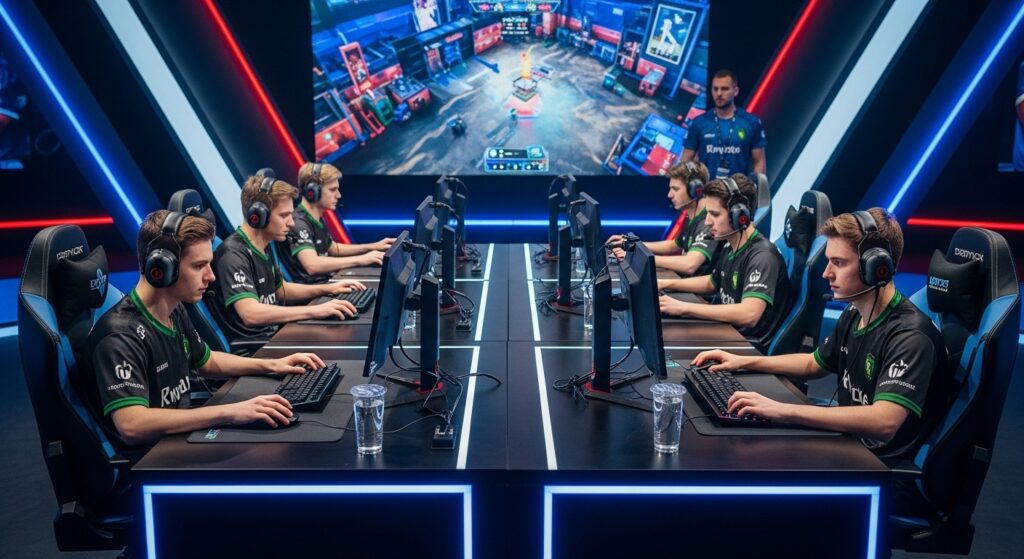
Esports, once a niche activity for passionate gamers, has grown into a global phenomenon that is reshaping the entertainment industry. What began as small, local tournaments has transformed into an enormous sector, attracting millions of fans, players, and investors worldwide. In this blog post, we will explore the growth of esports, its cultural impact, economic significance, and its future potential. We will also look at how this digital sport has evolved into a multi-billion-dollar industry and what makes it so appealing to a global audience.
The Beginnings of Esports: A Passionate Community
The origins of esports can be traced back to the early days of competitive gaming in the 1970s and 1980s. While the concept of competitive play was rudimentary at best, events such as the first “Space Invaders Championship” in 1980 set the stage for a growing interest in gaming competitions. However, it wasn’t until the late 1990s and early 2000s that esports truly began to take shape as we know it today.
The internet revolutionized competitive gaming by providing players with the ability to connect with others across the globe. Online multiplayer games like Quake and Starcraft laid the foundation for the modern esports ecosystem, with players not only competing locally but globally as well. In countries like South Korea, esports began to receive mainstream recognition. South Korea’s government, along with private companies, supported the growth of esports by establishing professional leagues and broadcasting tournaments on national television.
As the 2000s progressed, esports began to attract larger audiences and more substantial sponsorships. Games like Warcraft III, Dota, and Counter-Strike became staples of competitive gaming, with tournaments offering significant cash prizes and drawing huge crowds. The real turning point came in 2009 with the launch of League of Legends, a game that would go on to become a cornerstone of the esports industry.
The Esports Boom: Global Expansion and Mainstream Recognition
The 2010s marked a pivotal decade for esports. With the advent of platforms like Twitch and YouTube, the ability to stream live gaming events brought esports to the masses. These platforms allowed fans to watch tournaments in real-time, contributing to the rapid growth of the esports community. Streamers and content creators became celebrities in their own right, accumulating millions of followers who eagerly tuned in to watch their gameplay and learn from their expertise.
The world’s biggest esports tournaments, such as The International (Dota 2), League of Legends World Championship, and CS:GO Major Championships, began offering prize pools that were comparable to those of traditional sports tournaments, with some reaching into the tens of millions of dollars. The increasing media attention led to the rise of professional esports organizations, which began to recruit top-tier players and offer contracts, salaries, and sponsorship deals akin to those seen in traditional sports.
Esports’ rise in popularity was also fueled by its increasing accessibility. As broadband internet became more widespread and gaming technology advanced, people from all walks of life could participate in online tournaments and watch major events. No longer was esports limited to a small group of enthusiasts— it became a global spectacle that captured the imagination of millions.
Esports and Its Cultural Impact
The influence of esports extends far beyond the realm of gaming. Today, esports is embedded in pop culture, appealing to a wide demographic that includes young adults, teenagers, and even older generations. Competitive gaming has evolved into a form of entertainment, with esports athletes becoming celebrities in their own right.
The role of esports in youth culture cannot be overstated. For many young people, gaming has become a social activity where they not only compete but also forge meaningful connections with others. Platforms like Discord, Twitch, and Reddit have created spaces for fans to gather, chat about their favorite games, and share experiences. For some, esports has provided a sense of belonging, offering a supportive community that transcends geographical and cultural barriers.
Esports has also influenced other industries, including fashion, music, and entertainment. High-profile collaborations between esports organizations and brands like Nike, Adidas, and Coca-Cola have helped elevate the status of esports, making it a mainstream attraction. The partnership between esports teams and popular music artists has also become a significant trend, with live esports tournaments featuring music performances, much like traditional sports events.
Furthermore, the growing visibility of esports has led to increased participation in gaming culture, with many aspiring gamers turning to professional leagues as a viable career path. Universities and colleges are now offering scholarships for esports, and specialized programs in esports management, coaching, and content creation are being developed. This formalization of esports as an industry is opening doors for young people to pursue careers in gaming.
The Economic Impact of Esports
Esports has quickly become one of the most lucrative industries in the entertainment world. According to recent estimates, the global esports market is projected to reach over $1.5 billion by 2025, driven by sponsorships, media rights, advertising, ticket sales, and merchandise. These figures highlight the massive economic potential of esports, not only as a form of entertainment but also as a platform for business and investment.
Sponsorships play a crucial role in the financial success of esports. Brands are eager to align themselves with the growing esports community, seeing an opportunity to connect with a young, tech-savvy audience. Major companies like Intel, Red Bull, and Coca-Cola have entered the esports space, sponsoring tournaments, teams, and individual players. These sponsorships bring in millions of dollars each year, which helps fuel the expansion of esports infrastructure, including events, streaming platforms, and player support services.
Media Rights are another significant revenue stream. Platforms like Twitch and YouTube have secured exclusive broadcasting rights for some of the biggest esports tournaments. These media partnerships are mutually beneficial, as streaming services can attract large viewership numbers while esports organizations gain access to more funding. Additionally, esports broadcasting continues to evolve, with new platforms like Facebook Gaming and Trovo emerging to compete for streaming rights, further expanding the reach of esports.
Merchandise is another important revenue stream, as fans eagerly purchase branded clothing, accessories, and collectibles related to their favorite esports teams and players. This merchandise culture mirrors that of traditional sports, where team jerseys and memorabilia are sold at significant profit. As esports continues to grow, merchandise sales are expected to increase, creating new revenue opportunities for teams and organizations.
Ticket Sales for live esports events are also a major contributor to the industry’s growth. Major esports tournaments are now held in large arenas and stadiums, filling seats with tens of thousands of fans. These events generate substantial revenue not only from ticket sales but also from the sale of food, drinks, and exclusive event merchandise. This shift to large-scale, high-profile events has helped establish esports as a legitimate, mainstream form of entertainment.
The Future of Esports: Innovations and Growth
As esports continues to grow, several emerging trends are shaping its future. The most notable of these include advances in technology, the expansion of mobile gaming, and the integration of esports into traditional sports infrastructure.
Technology will continue to play a central role in the evolution of esports. Innovations in virtual reality (VR) and augmented reality (AR) are opening up new possibilities for gameplay and spectator experiences. VR gaming could offer players an entirely new level of immersion, while AR could enhance the viewing experience for fans, allowing them to interact with live events in ways previously unimaginable.
Mobile esports are also on the rise. With the proliferation of smartphones, games like PUBG Mobile, Arena of Valor, and Clash Royale have attracted huge audiences, particularly in regions like Asia and South America. Mobile gaming is making esports more accessible, as players can participate in tournaments from virtually anywhere. The increasing sophistication of mobile games means that mobile esports could soon rival PC and console gaming in terms of viewership and competition.
The integration of esports and traditional sports is another key trend. Major sports leagues, such as the NBA and NFL, have already begun to explore the world of esports by launching their own competitive gaming leagues and sponsoring esports teams. This convergence of industries could lead to greater investment in esports infrastructure, increased media coverage, and even more fans from traditional sports jumping into the esports scene.
Conclusion: The Future is Esports
Esports has proven that it is not just a passing trend but a revolutionary force in the world of entertainment. From its humble beginnings as a grassroots hobby to its current status as a global, multi-billion-dollar industry, esports has changed the way people interact with gaming, sports, and entertainment. With its rapid growth, increasing economic impact, and cultural significance, esports is on track to become one of the most dominant forms of entertainment in the 21st century.
Looking ahead, esports will continue to evolve, driven by technological advancements, new gaming platforms, and a growing fanbase. It’s clear that esports is here to stay, and its influence will only continue to expand. Whether you’re a fan, a player, or an investor, the world of esports offers exciting opportunities for engagement and growth in the years to come.




More Stories
Pixels to Podiums: The Rise of Esports as a Modern Sporting Power
Beyond the Screen: How Esports Is Redefining Competition, Culture, and Careers
Pixels to Glory: The Rise of Esports as a Global Sporting Powerhouse