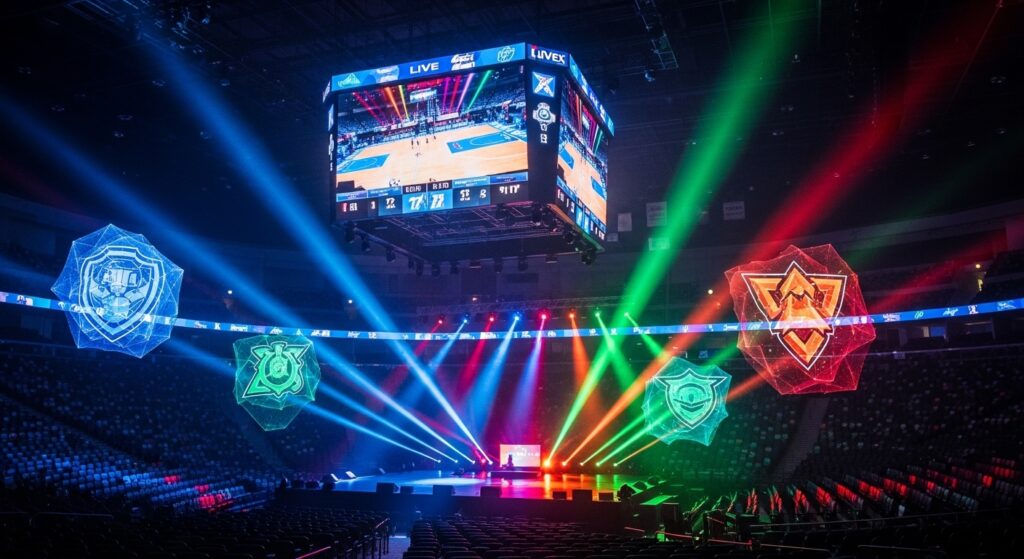
Esports, or competitive video gaming, has become one of the most exciting and fastest-growing industries in the world today. What started as a small, niche activity has evolved into a multi-billion-dollar industry with millions of fans, professional athletes, and global tournaments. With its explosive rise, esports has transformed from a hobby into a major cultural force that is challenging traditional sports for attention and investment. In this post, we’ll explore how esports has grown, what makes it so popular, and why it’s here to stay.
What is Esports? A New Era of Digital Competition
Esports refers to organized, multiplayer video game competitions where professional players or teams face off in various game genres such as first-person shooters, multiplayer online battle arenas, and real-time strategy games. Unlike casual gaming, where players engage for fun or personal achievement, esports brings together top-tier players who train rigorously and compete at the highest levels for prize money, sponsorships, and the glory of being crowned champions.
Esports competitions span a variety of games, including titles such as League of Legends, Dota 2, Counter-Strike: Global Offensive, Fortnite, and Overwatch. These games have become the foundation of the esports scene, attracting millions of players and viewers worldwide. What sets esports apart is not only the competitive nature but also the community and the intense level of organization behind every event, whether it’s a local tournament or a global championship.
A Brief History of Esports: From Humble Beginnings to Global Domination
The roots of esports can be traced back to the early days of video games. In the 1970s, competitive gaming was mainly about high score challenges in arcade games such as Space Invaders and Pong. However, the real shift toward competitive gaming came in the 1990s when multiplayer games allowed players to connect over local area networks (LANs). These events, which often took place in basements or gaming centers, paved the way for the first formal esports tournaments.
The launch of StarCraft in the late 1990s, alongside the rise of the internet, was a pivotal moment for competitive gaming. StarCraft, a real-time strategy game, became immensely popular, particularly in South Korea, where esports quickly began to gain mainstream attention. By the early 2000s, professional esports tournaments began to appear, with the establishment of events like the World Cyber Games in 2000, which set the stage for the global growth of esports.
In the following decade, streaming platforms like Twitch, founded in 2011, transformed how people engaged with esports. Streaming allowed fans to watch live tournaments and follow their favorite players in real time, making esports a truly global phenomenon. Tournaments like The International for Dota 2 and the League of Legends World Championship began to offer prize pools worth millions of dollars, further solidifying esports as a legitimate professional sport.
How Esports Works: The Structure of Competitive Gaming
Esports competitions are structured much like traditional sports leagues. Players compete individually or as teams in various competitions, aiming to qualify for regional and international tournaments. Each game has its own set of rules and tournament formats, but the structure usually involves several key stages.
Most major esports games have professional leagues where teams compete against each other over a season, accumulating points to qualify for playoffs. For example, League of Legends operates through regional leagues like the League of Legends Championship Series (LCS) in North America and the League of Legends European Championship (LEC) in Europe. The top teams from these regional leagues then battle it out at the League of Legends World Championship, the ultimate showdown for global dominance.
For other titles like Dota 2 and Counter-Strike: Global Offensive, tournaments follow a more open format, where teams must qualify through online qualifiers or regional events before advancing to larger tournaments. The International, the premier event for Dota 2, boasts one of the largest prize pools in esports history, often exceeding $30 million. This is a testament to the level of competition and the growing financial stakes involved in these tournaments.
The esports calendar is filled with a mix of regional competitions and international events, with major tournaments often broadcast online and via television to millions of viewers worldwide. Esports organizations, which are teams and management companies involved in competitive gaming, work with sponsors, broadcasters, and event organizers to ensure smooth operations and marketing of these events.
The Business of Esports: A Multi-Billion Dollar Industry
Esports is not just a game — it’s a massive business. The financial success of esports has turned it into an economic powerhouse, with revenue coming from several sources. The biggest revenue drivers are sponsorships, advertising, media rights, and merchandise. Major brands from diverse sectors — such as technology, beverages, apparel, and energy drinks — have flocked to sponsor esports teams and tournaments, seeing the opportunity to reach a young and tech-savvy audience.
Sponsorships and partnerships are central to the economics of esports. Large organizations like Intel, Coca-Cola, Nike, and Mercedes-Benz have invested millions of dollars in esports to promote their products. These companies see esports as an avenue to engage with the highly coveted millennial and Gen Z demographics who are increasingly tuning in to watch esports rather than traditional sports.
In addition to sponsorships, media rights have become a lucrative revenue stream. Platforms such as Twitch, YouTube Gaming, and Facebook Gaming dominate the esports streaming landscape, but traditional television broadcasters are also beginning to dip their toes into the esports pool. By purchasing broadcasting rights to major tournaments, these media companies can reach a global audience while generating advertising revenue.
Ticket sales and merchandise also contribute significantly to the industry’s profitability. Esports tournaments are held in large arenas where thousands of fans attend to watch their favorite players compete live. These events often sell out quickly, and fans flock to purchase branded merchandise, including jerseys, hats, and accessories, to show support for their teams.
The Social Aspect of Esports: A Global Community
Esports is not just about competition — it’s about community. One of the defining features of esports is the active, engaged audience that supports the players and teams. Fans interact with players, commentators, and fellow viewers through live chats, social media, and fan clubs. This sense of community is a driving factor in esports’ success.
The rise of streaming platforms like Twitch has brought fans closer to their favorite players and teams. Streamers and professional players can interact with their fans in real time, answering questions, chatting about the game, and even giving insights into their personal lives. This interaction fosters a deeper connection between players and their fans, leading to long-lasting fan loyalty.
Esports has also created new avenues for people to build careers. Many top players, coaches, and commentators have turned their passion for gaming into full-time professions. The most successful players are treated like celebrities, with large followings on social media and endorsement deals from major brands. Additionally, esports provides job opportunities for game developers, analysts, broadcasters, event organizers, and marketers, making it an inclusive industry that fuels a diverse range of careers.
Esports and Traditional Sports: A Growing Connection
The connection between esports and traditional sports has been growing stronger in recent years. Professional sports teams and athletes have started investing in esports, recognizing its potential as a new form of entertainment. Some NBA teams, such as the Golden State Warriors and the Cleveland Cavaliers, have established esports divisions and partnered with gaming organizations. Traditional sports leagues, including the NFL and MLS, are also exploring esports as a way to engage with younger audiences.
There is also a growing trend of hybrid events that combine elements of esports and traditional sports. For instance, FIFA esports tournaments have been held alongside live football matches, bridging the gap between virtual and real-world sports. This partnership not only enhances fan engagement but also provides exposure to esports in traditional sports settings.
Furthermore, the popularity of fantasy sports and esports betting is helping to align the two industries. Fans who participate in esports betting, fantasy leagues, or daily fantasy sports can enjoy a similar experience to those who follow traditional sports. This has led to increased media coverage and further mainstream recognition of esports as a legitimate form of competition.
The Challenges Ahead for Esports
Despite its rapid growth, esports faces several challenges that need to be addressed in order to continue its success. One major concern is the mental and physical well-being of players. Professional esports players train for hours each day, which can lead to burnout and fatigue. In recent years, organizations have begun to recognize the importance of providing players with mental health support, better working conditions, and regular breaks.
Another issue is the integrity of competition. Cheating, match-fixing, and doping are concerns in competitive esports, just as they are in traditional sports. While the esports community has implemented anti-cheating measures and technologies to ensure fairness, these problems continue to be a challenge. As the industry grows, it will need to establish stronger governance and regulation to maintain trust among fans and players.
Esports also faces challenges in terms of gender equality and inclusivity. While there has been significant progress in promoting diversity, women are still underrepresented in the professional esports scene. Many organizations are now actively working to create more inclusive environments for women and minorities, but it remains a work in progress.
The Future of Esports: What’s Next?
Looking ahead, the future of esports is incredibly promising. With the increasing popularity of mobile gaming, esports is expected to expand even further, particularly in regions like Asia and Latin America, where mobile gaming is extremely popular. The advent of virtual reality (VR) and augmented reality (AR) technologies will likely reshape the esports experience




More Stories
Pixels to Podiums: The Rise of Esports as a Modern Sporting Power
Beyond the Screen: How Esports Is Redefining Competition, Culture, and Careers
Pixels to Glory: The Rise of Esports as a Global Sporting Powerhouse