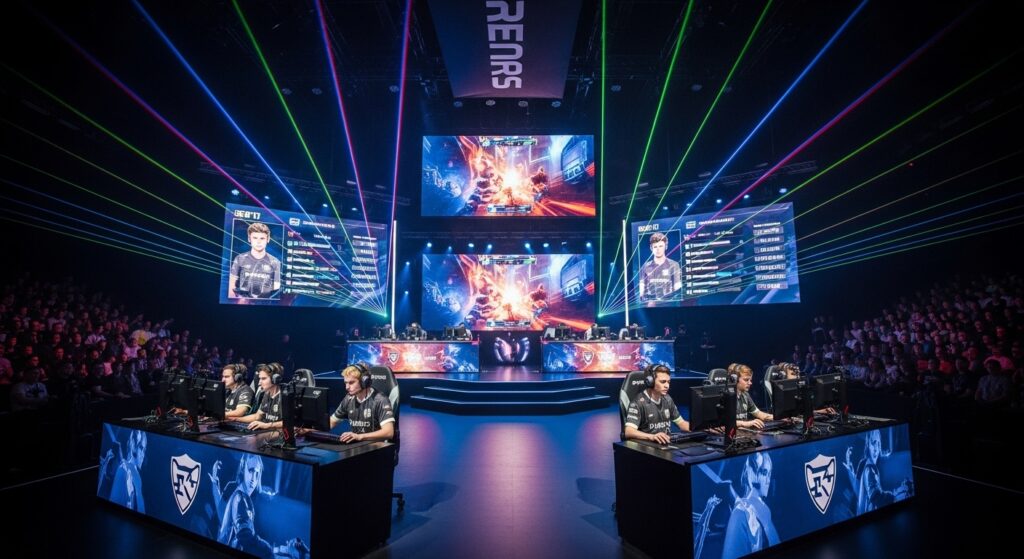
Esports has come a long way from being a niche hobby to becoming one of the most influential industries in the global entertainment landscape. Competitive gaming has transitioned from local LAN (Local Area Network) parties to grand international tournaments, with millions of dollars in prize money and global recognition. Today, esports is not just about playing video games—it’s a multi-billion-dollar industry that involves athletes, sponsors, media giants, and millions of fans.
In this post, we will dive deep into the world of esports, exploring its roots, the evolution of competitive gaming, the players and organizations driving the movement, and its growing influence on culture, technology, and the global entertainment scene.
What Exactly is Esports?
At its core, esports is the world of competitive video gaming. Unlike casual gaming, where players participate for fun and entertainment, esports involves highly skilled players competing at the highest levels in organized tournaments. Esports spans a wide variety of game genres, including strategy games, first-person shooters (FPS), battle royales, and sports simulation games.
The defining characteristic of esports is its competitive nature. Professional players, coaches, analysts, and teams come together to strategize, train, and compete for prizes, sponsorship deals, and prestige. Whether it’s a team-based title like League of Legends or a solo-player competition such as Fortnite, esports requires a unique combination of skill, strategy, reflexes, and mental agility.
The History of Esports: From Casual to Global Phenomenon
The origins of competitive gaming can be traced back to the early days of video games, but it wasn’t until the late 1990s and early 2000s that esports began to gain serious traction. The rise of online gaming, with the advent of titles such as Quake and StarCraft, provided the foundation for what would eventually become a global phenomenon.
The earliest organized tournaments were relatively small and often held at local LAN centers or college campuses. However, it wasn’t long before these events grew in scale and popularity. In South Korea, StarCraft became a national obsession, and the creation of the Korean e-Sports Association (KeSPA) in the early 2000s helped legitimize esports as a professional career. Broadcasts of major tournaments began to air on television, and the success of these broadcasts led to sponsorship deals, endorsements, and increasing viewership.
The 2010s marked the explosive growth of esports as an industry. Platforms like Twitch, YouTube Gaming, and Facebook Gaming enabled players to stream their gameplay to an ever-expanding audience, while tournaments like The International (Dota 2’s premier competition) and League of Legends World Championship became iconic global events, attracting millions of viewers. With major investments from tech companies, media corporations, and sponsorships from global brands, esports was firmly established as a significant part of the entertainment industry.
Esports Tournaments: The Pinnacle of Competitive Gaming
Esports tournaments are the heart and soul of the industry, providing a stage for the world’s best players to showcase their skills and compete for hefty prize pools. These tournaments often take place in large arenas or are streamed online to audiences around the world. The most prestigious esports competitions attract not only players but also massive viewership numbers, with fans tuning in from every corner of the globe.
The most well-known tournaments include The International for Dota 2, League of Legends World Championship, Overwatch League, and CS:GO Major Championships. These events draw thousands of spectators to stadiums, while millions more watch online. The prize pools can be staggering, with The International 2019 offering over $34 million in prizes, far surpassing many traditional sports tournaments.
These tournaments are often accompanied by a vibrant community culture, with fans cheering for their favorite teams and players. The excitement of live matches, the unpredictability of the gameplay, and the emotional highs and lows of a hard-fought competition make esports tournaments a thrilling experience for both participants and viewers alike.
The Business of Esports: A Billion-Dollar Industry
Esports is no longer a hobby—it’s big business. The global esports industry is worth billions of dollars, with revenues coming from a variety of sources including sponsorships, advertising, media rights, ticket sales, merchandise, and prize pools. According to recent reports, the industry is expected to continue its rapid growth, with estimates predicting that esports will generate over $1.6 billion in revenue by 2024.
Sponsorships play a crucial role in this growth. Major brands from outside the gaming industry, including Coca-Cola, Red Bull, Intel, and Nike, have all made significant investments in esports. These companies see esports as a way to reach a younger, tech-savvy demographic that consumes entertainment through digital platforms.
Media rights and broadcasting are another key revenue stream. Streaming platforms like Twitch, YouTube Gaming, and Facebook Gaming have become primary channels for viewing esports events. These platforms pay for the right to broadcast major tournaments and attract millions of viewers, generating income through ads, subscriptions, and sponsorships.
Additionally, many esports organizations have diversified their income by expanding into merchandise sales, creating branded clothing, accessories, and collectibles for their fans. The sale of in-game items, skins, and digital assets has also contributed to the financial success of the esports ecosystem.
Esports Players: The New Age Athletes
In traditional sports, athletes dedicate their lives to perfecting their craft, and esports players are no different. Professional esports players train for hours each day, refining their skills, analyzing game mechanics, and developing strategies to outsmart their opponents. Unlike traditional athletes, however, esports players don’t need to worry about physical conditioning—at least not in the conventional sense. Instead, they focus on reaction times, mental clarity, and teamwork.
The life of a professional esports player is demanding. Players are often part of teams, and these teams have dedicated coaches, analysts, and managers to help them reach their full potential. Just like any professional sport, players must maintain their mental health, stay in peak cognitive condition, and work together to achieve success. Many players begin their careers at a young age, with some entering the professional scene in their teens. The esports world is incredibly competitive, and the pressure to perform can be immense.
As esports has grown, so has the recognition of its stars. Players like Faker (Lee Sang-hyeok), Ninja (Tyler Blevins), and Shroud (Michael Grzesiek) have achieved international fame. They not only earn substantial salaries through tournament winnings and team contracts but also make money through sponsorships, streaming, and content creation. These players have become influencers in their own right, with millions of followers on social media platforms and a global fanbase.
Esports Organizations: The Backbone of Professional Gaming
Esports organizations are the driving force behind the professional scene. These teams recruit the best players, provide coaching and analysis, and compete in the biggest tournaments for fame and fortune. Teams like Team Liquid, Cloud9, Fnatic, and G2 Esports have become household names in the esports world, with loyal fanbases that support them in every competition.
An esports organization typically consists of multiple departments—such as coaching, player development, media management, and marketing—working in tandem to ensure that the team’s players are in top form and their brand is well-promoted. These organizations also have partnerships with corporate sponsors, which provide funding and resources that help the team thrive.
Moreover, esports organizations are not limited to just gaming. Many have diversified into other forms of content creation, including YouTube series, live streams, and even lifestyle brand endorsements. Esports organizations play a significant role in shaping the esports culture and turning it into a global spectacle.
Esports and Mainstream Media: The Growing Intersection of Gaming and Entertainment
Esports has found its way into the mainstream media, as traditional media companies have recognized its potential as a lucrative and engaging form of entertainment. Networks such as ESPN, Turner Sports, and BBC have broadcast esports events, and major corporations have increasingly invested in the sector. Additionally, esports tournaments have been featured in documentaries, TV shows, and movies, further embedding competitive gaming into the fabric of global entertainment.
Live streaming platforms like Twitch have become the go-to platforms for fans to watch their favorite gamers and tournaments in real-time. Esports personalities now have celebrity status, with many streamers and players branching out into other media ventures, such as acting, hosting, and even music production. The intersection between gaming and mainstream entertainment continues to grow, and it seems likely that esports will become an even more integral part of global culture in the years to come.
The Future of Esports: What Lies Ahead?
The future of esports is bright, with continued growth expected in every aspect of the industry. As technology improves, so too will the gaming experience. Virtual reality (VR) and augmented reality (AR) may soon play a key role in transforming how esports tournaments are played and viewed. In addition, the expansion of mobile gaming opens up new opportunities for competitive play, as mobile esports tournaments gain popularity in regions like Asia and Latin America.
The integration of esports into traditional sports leagues is another exciting possibility. Professional sports organizations like the NBA and NFL have already begun exploring ways to incorporate esports into their business models. Whether through esports leagues or partnerships with existing gaming franchises, traditional sports and esports may continue to converge.
Esports is also likely to continue its trend of global expansion, reaching new audiences and creating opportunities for gamers around the world. As new games emerge and the competitive scene evolves, esports will remain a dynamic and ever-growing force in the entertainment world.




More Stories
Pixels to Podiums: The Rise of Esports as a Modern Sporting Power
Beyond the Screen: How Esports Is Redefining Competition, Culture, and Careers
Pixels to Glory: The Rise of Esports as a Global Sporting Powerhouse