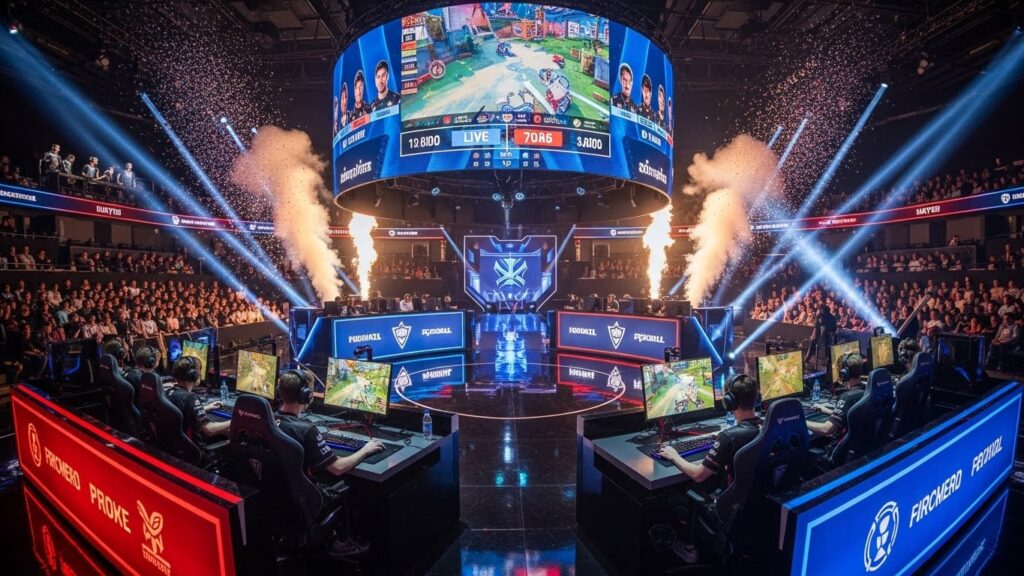
In recent years, esports has emerged as a global phenomenon, transforming the world of entertainment, sports, and digital culture. What began as casual video game competitions has evolved into a professional, multi-billion-dollar industry with international tournaments, dedicated fan bases, and career opportunities for players, coaches, and content creators. Esports is not just about gaming; it represents innovation, strategy, teamwork, and community. This blog explores the rise of esports, its impact on individuals and society, and the future potential of this fast-growing industry.
The Origins and Evolution of Esports
Esports has roots that stretch back several decades. Competitive gaming first appeared in the 1970s and 1980s with high-score contests in arcades and early computer games. Titles like Pong and Space Invaders offered players a platform to test their skills, often competing locally or through magazine-recorded scores.
The 1990s saw the rise of networked computers and gaming consoles, enabling multiplayer competitions. Games such as StarCraft, Quake, and Counter-Strike became staples in competitive gaming, attracting regional tournaments and organized leagues. By the early 2000s, esports began taking a professional shape, with the establishment of leagues, sponsorships, and prize pools, paving the way for today’s global competitions.
Modern esports spans a variety of genres including strategy games, first-person shooters, fighting games, and sports simulations. Major tournaments now attract millions of online viewers and often fill stadiums, reflecting the transition from casual pastime to serious competitive sport.
The Global Esports Industry
The esports industry has grown exponentially, becoming a multi-billion-dollar enterprise. Revenue streams include tournament prize money, sponsorship deals, media rights, merchandise, and in-game purchases. Countries like South Korea, China, and the United States have invested heavily in esports infrastructure, building arenas, academies, and training centers for aspiring professionals.
Esports teams operate similarly to traditional sports franchises, with recruitment, coaching, nutrition planning, and mental health support. Organizations participate across multiple game titles, maximizing their global influence and fan base. The industry also provides a career pathway not just for players, but for commentators, analysts, event managers, and content creators, making esports a diverse ecosystem of opportunity.
Why Esports Appeals to Millions
One of esports’ main attractions is accessibility. Unlike traditional sports, esports does not require physical strength or specialized facilities. Anyone with a computer, console, or smartphone can participate, making competitive gaming available to a wide and diverse audience.
The appeal also comes from its combination of skill, strategy, and teamwork. Successful esports players must make split-second decisions, communicate effectively with teammates, and anticipate opponents’ strategies. Spectators are drawn to the excitement, unpredictability, and mastery displayed in professional matches. Streaming platforms and social media amplify engagement, allowing fans to follow players, watch live events, and join interactive communities.
Cognitive and Mental Benefits of Esports
Esports provides several mental and cognitive advantages, contrary to the common misconception that it encourages laziness. Competitive gaming improves hand-eye coordination, problem-solving abilities, multitasking skills, and strategic thinking. Players constantly analyze dynamic situations, adapt strategies, and make rapid decisions, which strengthens mental acuity.
Esports also fosters perseverance and resilience. Professional players must overcome losses, refine their skills continuously, and adapt to new game updates. These experiences cultivate patience, focus, and goal-setting capabilities that extend into personal and professional life. For younger players, esports can serve as a platform for learning teamwork, leadership, and communication in a structured and competitive environment.
Social Connection and Community Building
Esports thrives on community and social interaction. Multiplayer games connect individuals across continents, fostering friendships and collaborations. Professional teams and fan communities create a sense of belonging, as members celebrate victories, discuss strategies, and share content.
Global tournaments bring diverse players and fans together, promoting cultural exchange and understanding. Esports is also inclusive, offering opportunities to individuals who may face barriers in traditional sports due to physical or social limitations. The digital nature of esports allows communities to flourish without geographic constraints, creating a truly global network of players and enthusiasts.
Career Opportunities in Esports
The esports industry offers a wide range of career paths. Professional players can earn significant incomes through salaries, tournament winnings, and sponsorships. However, esports also supports careers beyond playing. Coaches focus on strategy and mental preparation, analysts study gameplay and tactics, and commentators provide entertainment and insights for viewers.
Event organizers, content creators, and marketers ensure tournaments run smoothly and reach large audiences. Some organizations even offer educational programs and training academies to develop talent, emphasizing that esports is a sustainable career option. As the industry expands, so do opportunities for innovation, media production, and business development.
Challenges Facing the Esports Industry
Despite its growth, esports faces challenges. The physical and mental strain on professional players is significant. Extended hours of practice, irregular schedules, and high-pressure competition can lead to burnout, eye strain, and repetitive stress injuries. Many organizations are now emphasizing player wellness through exercise, nutrition, and psychological support programs.
Public perception is another hurdle. Critics often dismiss esports as “just gaming,” overlooking the skill, discipline, and strategic depth required. Changing this perception is crucial for esports to gain broader societal recognition as a legitimate form of competition.
Integrity issues also pose risks. Cheating, hacking, and match-fixing threaten the credibility of esports. To maintain professionalism, regulatory measures and anti-cheating technologies are being implemented across leagues and tournaments.
Technology Driving Esports
Technology is at the core of esports. Streaming platforms allow millions to watch live matches, while analytics tools provide insights into player performance, strategies, and audience engagement. Virtual reality and augmented reality are beginning to influence competitive formats, offering immersive experiences for both players and fans.
Artificial intelligence is also shaping the future of esports. AI can simulate opponents, analyze gameplay patterns, and suggest strategic improvements, enhancing training and performance. This technological integration makes esports a dynamic, evolving industry with continuous innovation.
Esports in Education
Educational institutions are increasingly embracing esports. Schools and universities offer programs, scholarships, and competitive teams, recognizing the benefits of gaming for skill development. Esports teaches collaboration, communication, leadership, and strategic thinking, skills that are transferable to professional and personal life.
Collegiate esports competitions provide structured pathways for aspiring players while promoting academic achievement. Research initiatives are also exploring the cognitive, social, and technological aspects of esports, demonstrating its potential as both an educational and professional field.
The Future of Esports
The future of esports is promising and transformative. As technology evolves, the industry will expand with new game genres, immersive experiences, and global audiences. Esports is likely to gain further mainstream recognition, bridging the gap between traditional sports and digital competition.
Inclusivity and accessibility are central to the industry’s future. Initiatives supporting players with disabilities, promoting gender equality, and fostering international participation are becoming more common. Virtual events and digital platforms also allow esports to minimize environmental impact while engaging global audiences.
The convergence of esports with virtual reality, interactive entertainment, and media production will create innovative ways for fans to participate. This integration of gaming, technology, and storytelling positions esports as a leading force in entertainment and culture.
Esports as a Cultural Movement
Esports has become a cultural phenomenon. It influences music, fashion, social media trends, and entertainment. Top players are celebrities with large followings, impacting global culture and inspiring younger generations. Merchandising, fan art, and community events further embed esports into mainstream society.
By challenging traditional definitions of sports and athleticism, esports demonstrates that skill, strategy, and dedication are not limited to physical activity. It reflects the evolving nature of competition in the digital age, offering new ways for people to connect, compete, and celebrate achievement.
Conclusion
Esports represents a fusion of technology, strategy, and culture, redefining competition for the modern era. From its humble beginnings in arcade contests to its current status as a professional global industry, esports has proven its legitimacy, influence, and cultural significance. It enhances cognitive skills, fosters social connection, and provides diverse career opportunities.
While challenges such as player burnout, public perception, and integrity issues remain, esports continues to grow and evolve. Its accessibility, global reach, and technological innovation make it a unique platform for competition, education, and entertainment.
Whether you are a player, a fan, or someone curious about the industry, esports offers an exciting and transformative experience. It is not just a game; it is a digital arena where skill, teamwork, and passion come together to shape a new generation of competition.




More Stories
Pixels to Podiums: The Rise of Esports as a Modern Sporting Power
Beyond the Screen: How Esports Is Redefining Competition, Culture, and Careers
Pixels to Glory: The Rise of Esports as a Global Sporting Powerhouse