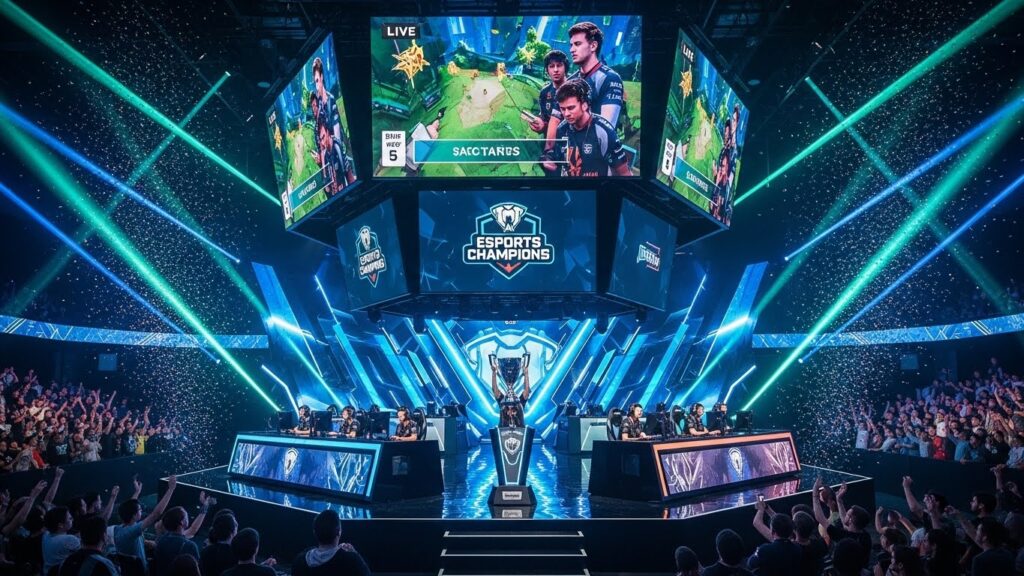
Esports, a term that was once synonymous with niche online communities, has exploded into a global phenomenon in recent years. From humble beginnings as LAN parties in basements to sold-out stadiums and multi-million-dollar tournaments, esports has emerged as one of the most lucrative and widely followed forms of entertainment. With its combination of skill, strategy, and passion, esports has firmly established itself as a mainstream sport, drawing millions of fans worldwide. This blog explores the rise of esports, its current state, and what the future holds for competitive gaming.
The Origins of Esports
The history of esports dates back to the 1970s when competitive gaming was still in its infancy. The first documented video game competition took place in 1972, with Stanford University hosting a “Spacewar” tournament. However, it wasn’t until the late 1990s and early 2000s that esports began to gain real momentum. The creation of multiplayer online games like StarCraft, Warcraft, and Quake laid the foundation for competitive gaming.
The introduction of platforms like Battle.net and gaming networks such as the Cyberathlete Professional League (CPL) provided a space for players to compete globally. However, it wasn’t until the advent of games like League of Legends and Dota 2 in the early 2010s that esports truly exploded in popularity.
The Explosion of Esports: How It Became Mainstream
One of the defining factors in the rise of esports was the increasing accessibility to high-speed internet, enabling gamers to compete from virtually anywhere in the world. As technology continued to advance, high-quality streaming platforms such as Twitch and YouTube Gaming provided fans with an opportunity to watch esports events in real-time. These platforms played a crucial role in making esports more mainstream by allowing fans to engage with the content in an interactive way, whether by chatting during a live broadcast or donating to their favorite players.
In addition to streaming, the growing professionalization of esports organizations helped elevate the status of competitive gaming. As organizations began signing top-tier players to contracts and offering sponsorship deals, esports became a legitimate career path for many aspiring gamers. The influx of investment from major corporations, including tech giants like Intel, Microsoft, and Coca-Cola, further legitimized esports as a professional industry.
Major Esports Titles: A Look at the Most Popular Games
Esports is defined by its games, and some titles have become synonymous with the industry. While there are many games that are played competitively, a few stand out due to their large player bases, fan followings, and professional tournaments.
League of Legends
One of the most iconic esports games of all time, League of Legends (LoL) is a multiplayer online battle arena (MOBA) game that pits teams of five players against each other in strategic, fast-paced combat. With its annual World Championship, which attracts millions of viewers, LoL has been at the forefront of the esports revolution. Riot Games, the developer behind LoL, has fostered a thriving esports ecosystem with regional leagues, international tournaments, and a robust system for nurturing new talent.
Dota 2
Another powerhouse in the esports world is Dota 2, developed by Valve. Known for its complexity and depth, Dota 2 has a dedicated following and hosts one of the most lucrative esports tournaments globally: The International. The prize pool for The International has often exceeded $30 million, making it one of the most financially rewarding competitions in the world of sports and gaming.
Counter-Strike: Global Offensive (CS:GO)
Counter-Strike: Global Offensive (CS:GO) has been one of the most enduring esports titles in history. A tactical first-person shooter (FPS), CS:GO has built a massive competitive scene with regional leagues and major tournaments, including the CS:GO Major Championships. Its accessibility, skill-based gameplay, and team dynamics have contributed to its longevity in the esports space.
Fortnite
Though a relative newcomer to the esports scene, Fortnite has made a significant impact since its launch in 2017. Developed by Epic Games, Fortnite popularized the battle royale genre and quickly became a staple in competitive gaming. Its combination of fast-paced action, building mechanics, and colorful art style attracted a wide demographic of players and viewers. The Fortnite World Cup, with a prize pool of $30 million, is a testament to the game’s importance in the esports ecosystem.
Call of Duty
The Call of Duty franchise has long been a dominant force in first-person shooters. Its competitive mode, known as the Call of Duty League (CDL), has seen growing popularity in recent years. Featuring teams from North America, Europe, and beyond, the CDL has made Call of Duty a staple in esports, offering fans high-octane action and team-oriented gameplay.
The Impact of Esports on Traditional Sports
As esports has grown, it has drawn comparisons to traditional sports like football, basketball, and soccer. While there are notable differences—such as the lack of physical activity in most esports—the parallels are undeniable. Like traditional sports, esports features professional players, teams, coaches, and analysts. The level of skill required in top-tier esports is also comparable to that of professional athletes.
One of the most significant impacts esports has had on traditional sports is the integration of esports into mainstream sporting events. For example, the Overwatch League has featured franchises owned by traditional sports teams like the New York Yankees and the Philadelphia 76ers. Furthermore, the rise of esports has led to discussions about the inclusion of competitive gaming in multi-sport events such as the Olympics, which may happen in the near future.
The Business of Esports: A Multi-Billion Dollar Industry
Esports is not only a form of entertainment but also a thriving business. The industry has seen exponential growth, with projections suggesting that it could surpass $1.5 billion in revenue by 2025. Sponsorships, advertising, media rights, and merchandising are the primary drivers of revenue within the esports ecosystem.
Sponsorship deals with major brands are one of the largest sources of income for esports teams and tournaments. Brands like Intel, Red Bull, and Coca-Cola have partnered with esports organizations to gain exposure to a young, tech-savvy audience. Media rights are another lucrative aspect of the esports business, with major streaming platforms like Twitch and YouTube paying for the exclusive rights to broadcast tournaments.
Merchandising is also a significant revenue stream, with esports teams selling jerseys, apparel, and other branded products to their fans. Additionally, esports betting has become a popular activity, contributing millions of dollars to the industry. This new revenue model has created an ecosystem where gamers, streamers, teams, and event organizers can all thrive financially.
The Future of Esports
As esports continues to grow, the future looks bright for competitive gaming. The potential for mainstream recognition is enormous, with esports increasingly becoming a part of the cultural zeitgeist. One area where esports is likely to expand is in the development of new technologies. Virtual reality (VR) and augmented reality (AR) are two areas that could revolutionize the esports experience, providing fans and players with a more immersive experience.
Moreover, the globalization of esports is expected to continue, with more regions embracing competitive gaming. While North America, Europe, and Asia have been the dominant regions in the esports scene, Africa, South America, and the Middle East are expected to see rapid growth in the coming years.
The rise of mobile gaming is another factor that will contribute to the future success of esports. Mobile esports has already taken off in regions like Southeast Asia, where games like PUBG Mobile and Mobile Legends have become hugely popular. The accessibility of mobile gaming means that esports can reach a much wider audience, further cementing its place in the mainstream.
Conclusion
Esports has come a long way from its humble beginnings, evolving into a global industry that captivates millions of fans worldwide. From groundbreaking games and tournaments to lucrative sponsorships and streaming platforms, esports has cemented its place as a dominant form of entertainment. As technology advances and the industry continues to grow, it’s clear that the future of esports is bright, and it may very well become a staple of mainstream sports in the years to come.
Whether you’re a player, a fan, or a casual viewer, it’s clear that esports is here to stay, offering a unique blend of competition, entertainment, and community that transcends the virtual world and becomes a cultural force in its own right.




More Stories
Pixels to Podiums: The Rise of Esports as a Modern Sporting Power
Beyond the Screen: How Esports Is Redefining Competition, Culture, and Careers
Pixels to Glory: The Rise of Esports as a Global Sporting Powerhouse