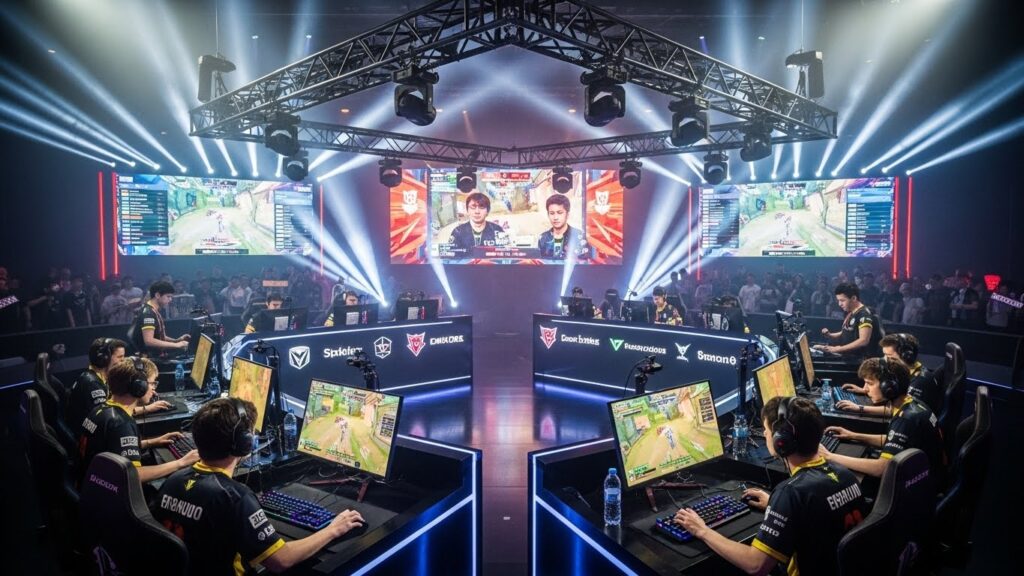
Esports, short for electronic sports, has evolved from a niche hobby to a global phenomenon over the last few decades. Competitive video gaming, once a pastime for a small group of enthusiasts, is now a multi-billion-dollar industry. Esports tournaments fill stadiums with fans, attract millions of online viewers, and offer substantial cash prizes for top players. In this blog post, we’ll explore the rise of esports, the factors contributing to its rapid growth, and how it has reshaped the entertainment landscape.
The Origins of Esports
The story of esports can be traced back to the 1970s and 1980s, a time when video games were still in their infancy. Early gaming competitions were small, informal events, often held in arcades or university campuses. The most notable early competition was the 1972 “Space Invaders Championship,” organized by Atari. This event marked the beginning of competitive gaming, though it was limited to a few hundred participants.
By the late 1990s and early 2000s, the internet began to offer new opportunities for players to compete against each other across vast distances. Games like “StarCraft,” “Quake,” and “Warcraft” were among the first to feature multiplayer modes that enabled competitive play on a global scale. The rise of platforms like Battle.net and the creation of LAN (Local Area Network) tournaments allowed players to connect, compete, and share their skills with an ever-growing community of gamers.
However, it wasn’t until the mid-2000s that esports began to gain significant traction, particularly in South Korea. With the country’s government’s active support of the gaming industry and the establishment of dedicated esports leagues, games like “StarCraft” became a national obsession. The creation of professional teams, broadcasted tournaments, and sponsorships set the stage for esports as we know it today.
The Explosion of Esports in the 2010s
The 2010s saw esports take off in a way that was previously unimaginable. Several key developments fueled this explosion, making esports one of the fastest-growing sectors in the entertainment industry.
1. Technological Advancements and Streaming Platforms
As internet speeds increased and technology improved, so did the potential for live streaming. Platforms like Twitch and YouTube Gaming allowed players to broadcast their gameplay to millions of viewers. This revolutionized the way fans interacted with esports, providing them with real-time access to competitions, gameplay strategies, and commentary.
Twitch, launched in 2011, quickly became the go-to platform for gaming content. With an easy-to-use interface, interactive features, and the ability to stream high-quality video, it drew millions of streamers and viewers. The launch of Twitch’s Partner Program also enabled top streamers to monetize their content, turning many of them into full-time content creators.
2. Global Tournaments and Sponsorships
Esports tournaments grew in scale and prestige, attracting major corporate sponsors from traditional industries like Coca-Cola, Intel, and Nike. The prize money for tournaments also skyrocketed, with competitions such as The International (the annual Dota 2 championship) offering multi-million-dollar prize pools.
These tournaments, often held in massive arenas or broadcast to millions of online viewers, demonstrated the growing mainstream appeal of esports. The atmosphere at these events mirrored that of traditional sporting events, with fans chanting, waving flags, and cheering for their favorite players or teams.
3. Esports as a Professional Career
As esports grew, so did the opportunities for players to make a career out of competitive gaming. Top players could now earn substantial incomes from tournament winnings, sponsorships, streaming, and team contracts. Esports organizations began to recruit talent from around the world, signing contracts with players and providing them with professional training, coaches, analysts, and support staff.
Teams like Cloud9, Team Liquid, and T1 became household names, and players like Faker (Lee Sang-hyeok) and s1mple (Oleksandr Kostyliev) became legends in the esports world. With the development of infrastructure around esports, players were able to hone their skills, gain recognition, and build lasting careers.
The Role of Esports in the Digital Economy
Esports has had a significant impact on the digital economy. Beyond the players, tournaments, and teams, a massive ecosystem has emerged around esports, creating jobs, business opportunities, and new forms of entertainment.
1. Sponsorships and Advertising
As esports grew, so did its appeal to brands and advertisers. Major companies saw esports as a way to reach a young, tech-savvy audience that spends a considerable amount of time online. This led to sponsorships, advertisements, and product placements within the esports scene. For example, energy drinks like Red Bull and Monster Energy have become staples in esports events, and gaming peripherals companies such as Razer and Logitech sponsor players and teams.
2. Content Creation and Media
Esports has also given rise to a new wave of content creators who produce videos, podcasts, and streams that focus on gaming and esports culture. These creators provide analysis, commentary, and entertainment that resonates with the global gaming community.
The growth of esports content has led to new media partnerships, with platforms like ESPN, Fox Sports, and even traditional cable networks covering esports events. These partnerships help bridge the gap between esports and traditional sports, showcasing the immense popularity of competitive gaming.
3. Game Development and Esports Integration
Game developers have realized the importance of creating games that are not only fun to play but also conducive to competitive gaming. Games like “League of Legends,” “Overwatch,” and “Valorant” have become staples of the esports scene, with developers creating specialized modes, features, and systems that support tournament play.
Esports integration also includes regular updates, balance changes, and dedicated esports leagues within games. These steps help keep the competitive integrity of the game intact and ensure that tournaments remain fair and exciting.
The Impact of Esports on Traditional Sports
The meteoric rise of esports has sparked debates about its place in the broader sports ecosystem. Esports shares many similarities with traditional sports, such as the emphasis on skill, strategy, and teamwork. However, esports is fundamentally different in that it takes place within virtual environments rather than physical arenas.
Despite these differences, esports is increasingly being viewed as a legitimate sport, with major sporting organizations and institutions recognizing its potential. The International Olympic Committee (IOC), for example, has expressed interest in including esports in the Olympic Games, though this remains a contentious issue due to concerns over the nature of the games and their classification as “sports.”
Furthermore, esports has also led to the creation of collegiate programs and scholarships, similar to traditional sports. Universities across the United States, for example, have begun to offer esports scholarships, recognizing gaming as a legitimate form of competition. These programs have helped further legitimize esports in the eyes of academics and institutions.
The Future of Esports
The future of esports looks incredibly promising, with continued growth on the horizon. Some key areas that will shape the future of esports include:
1. Esports as a Mainstream Entertainment Option
Esports is likely to become a mainstream form of entertainment, rivaling traditional sports in terms of viewership and fan engagement. As younger generations continue to embrace gaming, esports will continue to expand its reach. The ability to watch esports events on platforms like Twitch, YouTube, and even traditional TV will make it more accessible to a wider audience.
2. Mobile Gaming and Esports
The rise of mobile gaming has also had a significant impact on esports. Games like “PUBG Mobile” and “Free Fire” have attracted millions of players worldwide, especially in regions like Asia and Latin America. The growing popularity of mobile esports tournaments is opening up new opportunities for players and teams, expanding the esports ecosystem even further.
3. Virtual Reality and Augmented Reality
The integration of virtual reality (VR) and augmented reality (AR) into gaming could radically change the esports landscape. As VR technology becomes more advanced, we may see the emergence of fully immersive esports experiences, where players and viewers alike can interact with virtual environments in real-time. The combination of VR, AR, and esports could usher in a new era of entertainment, blending gaming with real-world interaction in exciting ways.
Conclusion
Esports has evolved from a small, niche community to a global powerhouse, reshaping the way we view gaming and competition. With its explosive growth, massive fan base, and increasing mainstream acceptance, esports is here to stay. As technology continues to improve and the industry matures, esports will likely continue to thrive and grow, offering new opportunities for players, teams, sponsors, and fans alike.
Esports is not just about playing games—it’s about creating a community, fostering competition, and providing entertainment that resonates with millions worldwide. As we look to the future, it’s clear that esports will continue to push boundaries and redefine the world of competitive entertainment.




More Stories
Pixels to Podiums: The Rise of Esports as a Modern Sporting Power
Beyond the Screen: How Esports Is Redefining Competition, Culture, and Careers
Pixels to Glory: The Rise of Esports as a Global Sporting Powerhouse