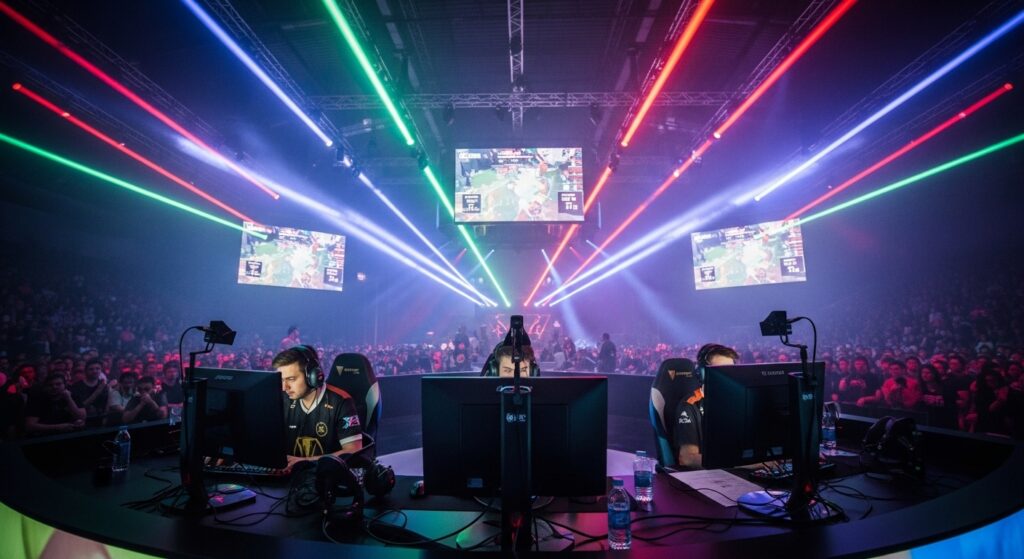
Introduction: From Niche Hobby to Global Stage
Esports, short for electronic sports, has transformed dramatically over the past two decades. What was once considered a niche hobby, dominated by small communities of gamers competing in local arcades or online forums, has now become a global phenomenon. The growth of technology, the rise of streaming platforms, and the increasing recognition of competitive gaming as a legitimate form of entertainment have all contributed to the exponential rise of esports. Today, esports tournaments fill stadiums, attract millions of viewers online, and offer prize pools worth millions of dollars.
Esports is not just about playing video games; it’s about strategy, teamwork, dedication, and mental resilience. It combines the thrill of competition with the creativity and skill of gaming, making it a unique cultural and sporting phenomenon in the 21st century.
The Origins of Competitive Gaming
Competitive gaming can trace its roots back to the 1970s and 1980s, when arcades and home gaming consoles first became popular. Early gaming competitions were relatively informal, often organized by local communities or game developers to promote new titles. One of the earliest recognized esports events was the Space Invaders Championship held in 1980, which attracted thousands of participants across the United States.
During the 1990s, the rise of PC gaming created a new platform for competition. Games like StarCraft, Quake, and Counter-Strike allowed players to compete over local networks and eventually the early internet. LAN (Local Area Network) tournaments became common, fostering the growth of competitive communities. These events laid the groundwork for what would eventually become professional esports, with dedicated teams, sponsorships, and organized leagues.
Technological Advancements Fueling Growth
The explosive growth of esports in the 2000s and 2010s can largely be attributed to technological advancements. High-speed internet, improved graphics, and powerful gaming hardware allowed gamers to compete at unprecedented levels. Online multiplayer platforms enabled players from around the world to connect, compete, and share strategies, creating a global esports community.
Streaming platforms such as Twitch revolutionized the way people consumed esports content. No longer confined to attending live tournaments, fans could watch their favorite players and teams in real time, interact via chat, and follow entire leagues from the comfort of their homes. This accessibility helped esports grow beyond its original gamer audience, attracting casual viewers, sponsors, and media coverage.
The Diversity of Esports Genres
Esports encompasses a wide variety of game genres, each requiring unique skills and strategies. Some of the most popular genres include:
Multiplayer Online Battle Arenas (MOBAs)
Games like League of Legends and Dota 2 dominate the MOBA scene. These games require teamwork, strategic thinking, and precise execution. Professional MOBA tournaments often feature large-scale international competitions with massive prize pools, drawing millions of viewers worldwide.
First-Person Shooters (FPS)
FPS games such as Counter-Strike: Global Offensive, Call of Duty, and Overwatch are central to the esports ecosystem. Success in FPS games depends on quick reflexes, accurate aim, map awareness, and team coordination. FPS esports have a particularly strong presence in North America, Europe, and Asia.
Real-Time Strategy (RTS)
RTS games like StarCraft II demand a blend of strategic planning, resource management, and multitasking. While not as mainstream as MOBAs or FPS games today, RTS games were foundational to the early esports community and remain influential in shaping competitive gaming culture.
Sports Simulation Games
Games like FIFA, NBA 2K, and Madden NFL bring traditional sports into the digital arena. These simulations appeal to fans of real-world sports, offering a familiar competitive environment while introducing unique digital challenges.
Fighting Games and Battle Royales
Fighting games such as Street Fighter and Tekken emphasize one-on-one skill-based combat, while battle royale titles like Fortnite and PUBG focus on survival, strategy, and adaptability in large, dynamic environments. Each genre has cultivated dedicated communities and professional circuits.
The Professionalization of Esports
The transition from casual gaming competitions to professional esports has been remarkable. Today, professional esports players undergo rigorous training schedules, often comparable to traditional athletes. Teams employ coaches, analysts, and psychologists to optimize performance. Sponsorship deals, merchandising, and media rights provide players with financial stability and incentivize high-level competition.
Esports leagues such as the Overwatch League, League of Legends Championship Series (LCS), and Call of Duty League operate with structured seasons, playoffs, and promotion/relegation systems, similar to traditional sports leagues. These organizations have professionalized esports, making it more sustainable and commercially viable.
Economic Impact and Sponsorship
Esports has become a significant economic driver. Revenue streams include sponsorships, advertising, ticket sales, merchandise, and streaming platform subscriptions. Global brands invest heavily in esports to reach younger, tech-savvy audiences, recognizing its potential for brand exposure and engagement.
The increasing prize pools in esports tournaments are also noteworthy. Iconic events such as The International for Dota 2 have offered prize pools exceeding tens of millions of dollars, demonstrating the financial viability of esports as a professional career. This economic growth has also spurred the development of esports-focused infrastructure, including dedicated arenas, training facilities, and media production studios.
Cultural Significance and Community
Esports has cultivated a unique culture that blends gaming, fandom, and digital interaction. Online forums, social media communities, and streaming chats create spaces for fans to connect, discuss strategies, and celebrate their favorite teams. Cosplay, fan art, and content creation further enrich the community experience.
Moreover, esports has helped challenge traditional perceptions of gaming. No longer seen purely as a pastime or distraction, competitive gaming is recognized for its skill, strategy, and entertainment value. Universities and schools have even introduced esports programs, offering scholarships and fostering the next generation of professional players.
Challenges and Controversies
Despite its success, esports faces several challenges. Player burnout, mental health concerns, and intense competition are common issues in professional circuits. The pressure to perform at the highest level, combined with grueling training schedules, can take a toll on players’ physical and mental well-being.
Additionally, controversies around cheating, match-fixing, and toxic behavior persist. Esports organizations continue to develop stricter regulations, anti-cheat systems, and codes of conduct to maintain integrity and fairness. Balancing rapid growth with sustainable practices remains an ongoing challenge.
The Global Reach of Esports
Esports has a truly global footprint. While North America and Europe were early adopters, Asia, particularly South Korea and China, has been instrumental in shaping professional esports. South Korea, often referred to as the birthplace of modern esports, has cultivated highly skilled players and professional leagues since the early 2000s. China has rapidly emerged as a powerhouse, investing heavily in esports infrastructure and large-scale tournaments.
Esports is now truly international, with competitions bringing together players from multiple continents. Tournaments are broadcast worldwide, with multilingual commentary and localized content catering to diverse audiences. This global reach underscores esports’ universal appeal and its potential to transcend cultural and geographic boundaries.
The Future of Esports
The future of esports looks promising and dynamic. Technological innovations such as virtual reality (VR), augmented reality (AR), and cloud gaming could redefine competitive gaming experiences. VR esports tournaments, for example, could create immersive environments where players and spectators engage in entirely new ways.
Integration with traditional sports may also expand. Collaborations between esports and conventional sports leagues offer opportunities for cross-promotions, shared fan bases, and hybrid events. Moreover, as esports gains further legitimacy, professional recognition, standardized regulations, and greater investment are expected to continue.
Esports may also influence education, with more institutions offering programs in game design, esports management, and digital media. This not only prepares students for careers within the industry but also legitimizes esports as a professional and academic field.
Conclusion: A New Era of Competition
Esports has grown from humble beginnings into a major global industry, combining the excitement of traditional sports with the creativity and innovation of gaming. It represents a cultural shift, where digital competition commands attention, admiration, and investment on par with physical sports.
As technology advances and audiences expand, esports will continue to evolve, offering new opportunities for players, fans, and businesses alike. It is no longer just a pastime—it is a testament to human ingenuity, skill, and the universal appeal of competition in the digital age.
The journey of esports is far from over, and the next decade promises to bring even more innovation, excitement, and recognition for this extraordinary digital phenomenon.




More Stories
Pixels to Podiums: The Rise of Esports as a Modern Sporting Power
Beyond the Screen: How Esports Is Redefining Competition, Culture, and Careers
Pixels to Glory: The Rise of Esports as a Global Sporting Powerhouse