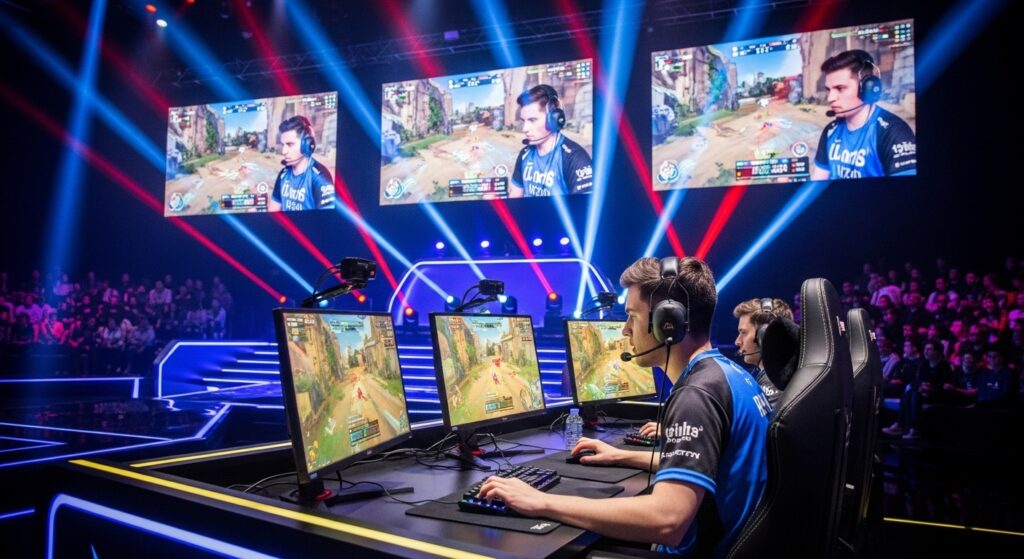
In recent years, esports has transformed from a niche hobby into a global phenomenon, captivating millions of fans across the world. What once was considered a casual pastime for gamers has now become a full-fledged industry, with professional teams, international tournaments, and massive sponsorship deals. This evolution highlights the growing cultural and economic significance of competitive gaming, as it continues to redefine the landscape of modern entertainment.
Esports’ journey from humble beginnings in arcade competitions to stadium-filling events is remarkable. Early gaming competitions were often informal gatherings, sometimes held in basements or local community centers. The rise of the internet in the late 1990s and early 2000s paved the way for online gaming tournaments, allowing players to connect and compete across vast distances. Games like StarCraft, Counter-Strike, and Warcraft III laid the foundation for modern esports, demonstrating that skill, strategy, and teamwork could captivate audiences just as effectively as traditional sports.
The Popularity Surge: Why Esports Matters
One of the primary reasons esports has exploded in popularity is accessibility. Unlike traditional sports, which often require physical prowess, specialized facilities, and significant financial investment, esports can be enjoyed by almost anyone with a computer or gaming console. This inclusivity has democratized competition, allowing players from diverse backgrounds to compete at high levels.
Moreover, esports has become a social phenomenon. Streaming platforms like Twitch, YouTube Gaming, and others have created interactive communities where fans can watch, chat, and engage with professional gamers in real-time. This interactivity has blurred the line between spectator and participant, fostering a sense of belonging and excitement that traditional sports sometimes struggle to match. The social element of esports extends beyond online platforms; live events draw thousands of fans who come together to celebrate their favorite games and players, creating a vibrant festival-like atmosphere.
The Economics of Esports
The financial growth of esports has been staggering. In 2023, the global esports market was valued at over a billion dollars, and projections suggest continued exponential growth. Revenue streams are diverse, including sponsorship deals, advertising, ticket sales, merchandise, and media rights. Major brands, from technology companies to energy drink manufacturers, are investing heavily in esports, recognizing its potential to engage a younger, digitally native audience.
Professional esports players can earn substantial incomes, particularly those competing in high-profile tournaments. Prize pools for events like The International, League of Legends World Championship, and Fortnite World Cup often reach millions of dollars. Beyond winnings, top players also generate income through streaming, content creation, and brand partnerships. This financial incentive has turned esports into a viable career path, inspiring countless young gamers to pursue competitive gaming professionally.
Competitive Esports: Teams, Tournaments, and Strategies
Esports is not just about playing video games—it is a highly strategic, team-oriented endeavor. Professional teams spend countless hours analyzing opponents, practicing coordination, and refining tactics. Each game has its own meta, which evolves constantly, requiring players to adapt and innovate continuously. In team-based games like Dota 2, League of Legends, and Overwatch, synergy and communication are critical. Individual skill is important, but success often hinges on flawless teamwork and split-second decision-making.
Tournaments are central to the esports ecosystem. They range from small local competitions to massive international events broadcast to millions of viewers. Notable tournaments such as the League of Legends World Championship, Dota 2’s The International, and CS:GO Major Championships have become cultural milestones, attracting attention from mainstream media. These events not only showcase elite gameplay but also emphasize entertainment, production value, and storytelling, further elevating esports’ legitimacy as a spectator sport.
Technological Advancements Shaping Esports
Technology has played a pivotal role in esports’ growth. High-speed internet, powerful gaming hardware, and sophisticated streaming platforms have made competitive gaming more accessible and enjoyable for both players and fans. Innovations in virtual reality and augmented reality hint at the next frontier for esports, offering immersive experiences that blur the line between digital and physical spaces.
Artificial intelligence and analytics are also transforming professional play. Teams utilize data-driven strategies, analyzing patterns, win rates, and in-game behavior to optimize performance. These advancements mirror traditional sports’ use of analytics, demonstrating that esports is as much a science as it is an art. Additionally, improvements in broadcast technology, such as multi-angle camera setups and live commentary overlays, have enhanced the viewing experience, making esports more compelling for casual and dedicated audiences alike.
The Role of Streaming Platforms
Streaming platforms have revolutionized how audiences engage with esports. Services like Twitch and YouTube Gaming allow players to broadcast their gameplay to millions of viewers worldwide. These platforms have created new opportunities for fan interaction, sponsorship, and personal branding. Streamers often cultivate dedicated communities, offering insights, entertainment, and live commentary that enhance the overall experience of watching esports.
Beyond individual streams, these platforms host major tournaments, live shows, and interactive fan events. This accessibility has shifted esports from being a niche activity to a mainstream cultural phenomenon. Fans can follow their favorite players’ careers, participate in live chats, and even influence in-game decisions during certain interactive streams, creating an unprecedented level of engagement.
Esports and Education
Interestingly, esports has found a place in education. Schools and universities worldwide are establishing esports programs, offering scholarships and formalized training opportunities. These programs promote teamwork, critical thinking, and problem-solving skills while providing a structured environment for competitive gaming.
Academic institutions also recognize the potential career pathways associated with esports, from game design and programming to marketing, event management, and broadcasting. By integrating esports into curricula, schools aim to harness students’ passion for gaming in constructive, skill-building ways. The educational dimension of esports underscores its potential to influence not just entertainment, but also learning and career development.
Cultural Impact of Esports
Esports has influenced culture in myriad ways. Gaming conventions, cosplay events, and fan communities have grown around popular games, blending creativity, performance, and fandom. Esports also challenges traditional notions of sportsmanship, competition, and entertainment, emphasizing strategy, reflexes, and digital mastery over physical athleticism.
The global reach of esports has facilitated cross-cultural exchange, with players from different countries collaborating on teams and competing internationally. This fosters understanding, camaraderie, and competition on a global scale. Esports stars often become cultural icons, inspiring merchandise, fan art, and media coverage, similar to celebrities in traditional sports.
Challenges Facing the Esports Industry
Despite its rapid growth, esports faces several challenges. One major issue is the lack of standardized regulation, which can lead to inconsistencies in tournament rules, player contracts, and team management. Player health is another concern, as long hours of practice and high-pressure environments can lead to physical and mental strain.
Additionally, the perception of esports as a “real sport” is still debated in some circles. While many recognize the skill and dedication required, others dismiss it as merely playing video games. Overcoming these societal biases is crucial for esports to gain broader acceptance and legitimacy. Finally, as the industry grows, ensuring fair play, addressing cheating, and managing intellectual property rights are ongoing challenges that stakeholders must navigate carefully.
The Future of Esports
Looking ahead, the future of esports is bright and full of potential. Emerging technologies such as virtual reality, cloud gaming, and AI-driven analytics will continue to transform gameplay and viewing experiences. Esports may also expand into new formats, combining elements of traditional sports, entertainment, and interactive media.
Sponsorship and investment are likely to increase as more companies recognize esports’ reach and influence. Additionally, continued integration with education and professional development will create sustainable pathways for aspiring players. As societal acceptance grows, esports could achieve parity with traditional sports in terms of recognition, infrastructure, and cultural significance.
Conclusion
Esports has evolved from small, informal competitions into a global powerhouse, blending entertainment, skill, and culture. Its rise has been fueled by technology, accessibility, community engagement, and economic opportunity. Professional players, teams, and tournaments have redefined what it means to compete, offering thrilling experiences for millions of fans worldwide.
While challenges remain, the trajectory of esports is unmistakably upward. Its influence on culture, education, and technology signifies that esports is more than just a passing trend—it is a defining element of modern entertainment. As the industry continues to grow and innovate, it will undoubtedly continue to shape the way we play, watch, and experience games for years to come.




More Stories
Pixels to Podiums: The Rise of Esports as a Modern Sporting Power
Beyond the Screen: How Esports Is Redefining Competition, Culture, and Careers
Pixels to Glory: The Rise of Esports as a Global Sporting Powerhouse