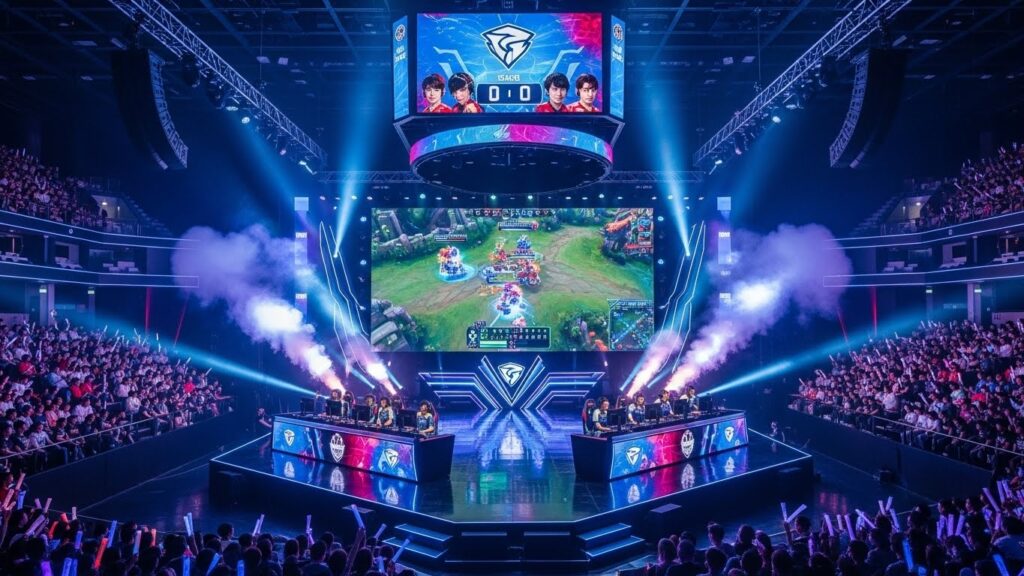
Esports, or competitive gaming, has grown from a niche pastime to a global industry worth billions. What started as small LAN tournaments in local arcades and living rooms has now become a major global spectacle, attracting millions of viewers, multi-million-dollar sponsorships, and full-time careers for professional gamers. This blog post takes a deep dive into the evolution of esports, examining its rise, the forces driving its success, and what the future holds for this rapidly expanding industry.
The Birth of Esports: Humble Beginnings
Esports began as a grassroots phenomenon in the early 1990s. With the rise of personal computers and the internet, competitive gaming emerged in small communities where players would battle against each other in local tournaments. Games like Street Fighter and Doom set the stage for more organized competitions, but it was titles like StarCraft and Quake that started to lay the foundation for the modern esports ecosystem.
The first significant esports event is widely considered to be the 1997 Red Annihilation tournament, which was held for the game Quake. The winner of this tournament, Johnathan “Fatal1ty” Wendel, would go on to become one of the first professional gamers, capitalizing on his tournament success and launching a career that helped legitimize esports as a serious competitive endeavor. At this point, esports still had a limited reach, but it was growing slowly in its niche.
The early 2000s saw the development of some of the first major esports organizations and leagues. In 2000, the Cyberathlete Professional League (CPL) was founded, providing a platform for professional gamers to compete for significant prizes. The CPL attracted top-tier players and was one of the first signs that esports could potentially evolve into a sustainable industry.
The Rise of Major Games and Tournaments
As the decade progressed, the growth of the esports scene accelerated. Titles like Warcraft III, Counter-Strike, and League of Legends became the foundation of many competitive gaming scenes. The launch of World of Warcraft in 2004 was another critical turning point, as it introduced the world to large-scale multiplayer experiences that could sustain ongoing esports competitions.
The real breakthrough came in 2010 with the creation of League of Legends, a multiplayer online battle arena (MOBA) game developed by Riot Games. League of Legends quickly became one of the most played and watched games in the world, with millions of players and viewers flocking to tournaments like the League of Legends World Championship. The game’s explosive growth helped esports shed its image as a niche hobby and introduced it to a broader audience.
Around the same time, the emergence of Twitch as a streaming platform played a pivotal role in the expansion of esports. Twitch allowed gamers to broadcast their gameplay live to a global audience, making it easier for people to watch and engage with esports events from the comfort of their own homes. In 2014, Amazon acquired Twitch for nearly a billion dollars, signaling just how important the platform had become in the growing esports ecosystem.
The Business Boom: Investment and Sponsorships
As esports grew in popularity, so did the interest of big corporations and investors. Sponsorship deals, broadcast rights, and advertising revenue quickly became a major source of income for esports leagues and teams. Companies like Coca-Cola, Intel, and Red Bull began pouring money into the industry, further legitimizing esports as a serious business.
The emergence of esports as a spectator sport also attracted investors from traditional sports industries. In 2015, NBA team owner and venture capitalist Steve Kaplan purchased a stake in the esports team Team Dignitas, marking one of the first major investments from traditional sports figures into esports. Since then, numerous professional athletes, including the likes of Michael Jordan, Shaquille O’Neal, and Cristiano Ronaldo, have invested in esports teams, helping to bridge the gap between traditional sports and competitive gaming.
The sponsorships and investments poured into esports events and leagues have allowed for larger and more spectacular events, including massive prize pools. The The International (TI), the premier Dota 2 tournament, has one of the largest prize pools in all of sports, regularly surpassing $30 million. This kind of prize money has helped to attract the best players in the world, further elevating esports to the level of traditional sports in terms of competition and prestige.
The Evolution of Esports Infrastructure
As the esports industry has grown, so too has the infrastructure that supports it. The rise of esports organizations, teams, and training facilities has turned professional gaming into a full-time job for many. Players now receive coaching, team support, and specialized training regimens, similar to athletes in traditional sports.
Esports organizations like Cloud9, Team Liquid, and Fnatic have become household names in the gaming community, recruiting top-tier players and forming multi-game rosters. These organizations not only participate in competitions but also build their own brand identities, merchandise lines, and content channels, further cementing their role as pillars of the esports industry.
Along with the teams, specialized esports arenas have begun to emerge. The most notable example is the ESL One arena in Cologne, Germany, and the Blizzard Arena in Los Angeles, both of which host large-scale tournaments and live audiences. These venues allow fans to witness esports in person, similar to how fans flock to stadiums for traditional sports events.
The Globalization of Esports
One of the most fascinating aspects of esports is its global nature. Unlike traditional sports, which are often confined to specific countries or regions, esports has a worldwide appeal that transcends geographic borders. Tournaments take place in all corners of the globe, from North America and Europe to South Korea and China. Games like League of Legends, Counter-Strike: Global Offensive, and Overwatch boast players from all over the world, making esports a truly international phenomenon.
The rise of esports in countries like South Korea has also contributed to the industry’s global appeal. In the early 2000s, South Korea became a hotbed for competitive gaming, with games like StarCraft and Warcraft III gaining massive followings. The creation of the Korean eSports Association and the launch of television broadcasts for StarCraft tournaments helped solidify the country as a leader in esports culture.
Today, countries across Asia, Europe, and North America boast highly competitive gaming scenes, with local tournaments feeding into global events. In particular, China and South Korea have become major players in the esports industry, both in terms of player talent and fanbase size. The rise of League of Legends in China, for example, has led to massive sponsorships and viewership numbers for the LPL (League of Legends Pro League), and South Korea’s LCK (League of Legends Champions Korea) is one of the most prestigious leagues in the world.
The Future of Esports: What’s Next?
Looking ahead, the future of esports is incredibly bright. As technology continues to evolve, so too will the gaming experience. Virtual reality (VR) and augmented reality (AR) hold the potential to revolutionize esports by offering players and fans entirely new ways to engage with competitive gaming. VR esports, in particular, could usher in a new era where physical movement and immersion become key components of competition.
Additionally, as the esports ecosystem matures, we will likely see even more professional leagues, much like traditional sports leagues such as the NFL, NBA, and FIFA. The concept of esports becoming part of the Olympic Games has already been discussed, and while challenges remain in terms of governance and standardization, the possibility of esports becoming an official Olympic event is certainly on the horizon.
Esports will also continue to become more integrated with mainstream media, television, and streaming platforms. Broadcasts of major tournaments on platforms like YouTube, Twitch, and even traditional television will become even more polished, with increased production value and larger audiences. The demand for esports content will only continue to rise, as the next generation of gamers and viewers are more inclined to watch and participate in online gaming experiences than ever before.
Conclusion
From its humble beginnings to its present-day status as a global powerhouse, esports has come a long way. What was once a niche hobby is now a multibillion-dollar industry with professional players, high-stakes tournaments, and global fanbases. As technology advances, and esports continues to grow and evolve, the future holds exciting possibilities for both players and fans alike. With more investment, international collaboration, and innovation, esports is well-positioned to become one of the most influential entertainment industries of the 21st century.
As we continue to see esports gain traction, it’s clear that the sport is here to stay, offering new career paths, entertainment, and cultural impact for generations to come. The evolution of esports is a story of resilience, community, and the ever-present desire to compete—something every gamer can relate to.




More Stories
Pixels to Podiums: The Rise of Esports as a Modern Sporting Power
Beyond the Screen: How Esports Is Redefining Competition, Culture, and Careers
Pixels to Glory: The Rise of Esports as a Global Sporting Powerhouse