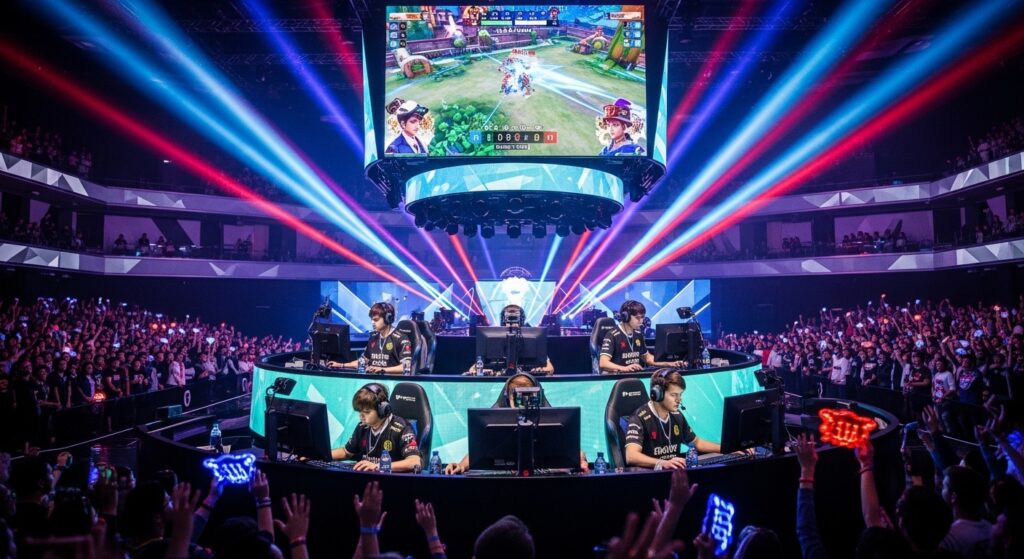
Esports is no longer a passing trend—it’s a global phenomenon. What started as a hobby for tech enthusiasts has now transformed into a multi-billion-dollar industry with millions of fans around the world. From large-scale tournaments with massive prize pools to professional gaming leagues, esports has solidified its place in the entertainment industry. In this blog post, we will explore the rise of esports, its impact on culture, and what the future holds for competitive gaming.
What is Esports? Understanding Competitive Gaming
At its core, esports refers to organized video game competitions, often featuring professional players or teams. These competitions are typically multiplayer, and the games played vary in genres from first-person shooters (FPS) to multiplayer online battle arenas (MOBA), real-time strategy (RTS), and sports simulation games. Esports can be played online or in-person at events held in massive arenas, with both players and spectators participating at the highest level.
Unlike casual gaming, esports involves intense competition, training, and strategy. Professional players spend hours every day honing their skills, just as athletes in traditional sports would. Esports tournaments, which can be broadcast live to millions, feature these elite players battling for pride, recognition, and substantial prize money.
The Surge in Popularity: Why Esports is Thriving
Esports’ rise can be attributed to several factors that have come together to make it a dominant force in entertainment. The convergence of technology, culture, and media has allowed esports to break out from its niche community and reach a global audience.
1. Access to Online Platforms
Streaming services like Twitch, YouTube Gaming, and Facebook Gaming have revolutionized how fans interact with esports. These platforms allow people to watch live tournaments, follow their favorite players, and even participate in community discussions. The accessibility of these platforms means that fans from any corner of the globe can tune in and be part of the action.
2. Competitive Infrastructure
Esports has become incredibly well-organized, with a professional ecosystem that mirrors traditional sports leagues. There are now sponsorship deals, marketing teams, media rights agreements, and even franchises. Well-established organizations such as Team Liquid, Cloud9, and FaZe Clan are household names in the esports industry, and they represent top-tier players across various games.
3. The Cultural Impact of Gaming
Gaming has grown beyond a hobby into a lifestyle for millions of people. Esports not only appeals to players but to fans as well, creating a sense of community. Major tournaments such as the League of Legends World Championship or Dota 2’s The International draw millions of viewers and have a cultural impact similar to that of traditional sports events. Esports is also supported by the younger generation, who are more inclined to embrace digital forms of entertainment.
4. Increased Investment
Esports’ growth has attracted significant investment from large companies, including tech giants like Intel, Samsung, and Coca-Cola. Investors see the potential for high returns as esports continues to captivate younger audiences and expand globally. This financial backing has allowed esports organizations to grow their teams, offer larger prize pools, and make esports a more professionally managed industry.
Key Esports Titles: Games Leading the Charge
Esports spans many different genres of games, but certain titles have stood out for their popularity and the size of their competitive scenes. Some of the most influential games in esports are:
1. League of Legends (LoL)
“League of Legends,” developed by Riot Games, is one of the most iconic esports titles of all time. With its annual World Championship attracting millions of viewers, LoL has maintained its status as a top esport for over a decade. The game’s strategic depth, diverse champions, and fast-paced gameplay make it a favorite among both players and viewers.
2. Dota 2
Another major player in the esports scene is “Dota 2” from Valve. The International, the game’s premier tournament, has one of the largest prize pools in esports history, often exceeding $30 million. “Dota 2” is known for its high level of strategy, and the skill ceiling is exceptionally high, making it a favorite among hardcore competitive players.
3. Counter-Strike: Global Offensive (CS: GO)
“CS: GO” has been a staple in competitive gaming for over a decade. It’s one of the most popular first-person shooter (FPS) games, with tournaments like the ESL Pro League and CS: GO Majors drawing massive crowds. The game’s tactical gameplay, team coordination, and gun mechanics have made it a staple in competitive gaming.
4. Fortnite
“Fortnite,” the battle royale phenomenon from Epic Games, has made waves not just as a game but as a cultural touchstone. Its fast-paced gameplay and frequent updates have kept it at the top of the gaming charts, while esports events like the Fortnite World Cup have made its competitive scene lucrative and exciting to watch.
5. Overwatch
Blizzard’s “Overwatch” has combined elements of first-person shooters and team-based objectives, creating an innovative esports experience. The Overwatch League (OWL) represents a new way to approach esports, modeled after traditional sports leagues. The game’s colorful characters and strategic depth make it an exciting title for both players and fans.
The Impact of Esports on Traditional Sports and Entertainment
Esports’ influence has expanded beyond gaming communities, impacting traditional sports and the broader entertainment industry. One of the most significant areas of overlap is the increasing partnership between esports organizations and traditional sports teams.
1. Sports Team Investments
Many traditional sports teams have started to invest in esports, seeing its potential for engaging younger audiences. The NBA has teams like the Philadelphia 76ers and the Los Angeles Lakers investing in esports franchises, while European football clubs like Manchester City and Paris Saint-Germain have fielded esports teams. This crossover shows how traditional sports are embracing the digital world and its growing influence.
2. Esports in the Olympics?
The International Olympic Committee (IOC) has expressed interest in the possibility of adding esports to the Olympics in the future. While the inclusion of esports in the Summer or Winter Olympics is not yet official, discussions are ongoing. The competitive structure, the global appeal, and the involvement of millions of young people worldwide make esports an attractive addition to the Olympic program.
3. Cross-Promotions and Media Deals
Esports has secured media deals with major platforms like ESPN and TBS, who have started broadcasting live esports events. This represents a broader acceptance of esports as a legitimate form of entertainment. Major brands like Coca-Cola, Adidas, and Red Bull are also investing heavily in esports sponsorships, seeing the potential in reaching younger, tech-savvy audiences.
The Future of Esports: What’s Next?
The esports industry is just getting started, and its future is brimming with potential. With continued growth in technology, media, and audience engagement, the future of esports holds many exciting possibilities.
1. The Rise of Mobile Esports
Mobile gaming has become increasingly popular, particularly in Asia, where mobile esports titles like “PUBG Mobile” and “Mobile Legends” have built massive communities. As mobile devices continue to improve in terms of graphics and processing power, mobile esports is expected to grow, offering new opportunities for gamers and tournaments.
2. Virtual Reality (VR) and Augmented Reality (AR)
As technology advances, VR and AR may play an integral role in shaping the future of esports. Imagine watching a tournament with immersive 3D technology, or participating in a virtual competition where you control the action in real-time. These technologies could create new ways to engage with esports, making the experience even more interactive and exciting for players and fans.
3. Continued Global Expansion
Esports is continuing to grow, with emerging markets in regions like Southeast Asia, South America, and the Middle East providing new opportunities for expansion. The increase in internet access and mobile devices globally will help boost the reach of esports, making it an even more universal form of entertainment.
4. Collegiate Esports and Education
The rise of collegiate esports leagues and scholarship programs is another exciting development. Universities in the United States and around the world are investing in esports facilities and teams, offering students the opportunity to pursue careers in gaming while earning scholarships. This will further legitimize esports as a professional career option and provide a new generation of players with the resources they need to succeed.
Conclusion: Esports as the Future of Entertainment
Esports has come a long way from its humble beginnings. Today, it is a booming industry with millions of viewers, professional players, and sponsors. As technology continues to evolve and gaming becomes even more integrated into mainstream entertainment, the possibilities for esports are limitless. Whether it’s through advanced broadcasting techniques, global tournaments, or new game titles, esports is poised to continue its rapid growth and cement itself as a central pillar in the world of competitive sports and entertainment.
For anyone looking to dive into the world of esports, whether as a fan, player, or spectator, the future is incredibly bright. The digital revolution in competitive gaming is just getting started—and it promises to be a thrilling ride for everyone involved.




More Stories
Pixels to Podiums: The Rise of Esports as a Modern Sporting Power
Beyond the Screen: How Esports Is Redefining Competition, Culture, and Careers
Pixels to Glory: The Rise of Esports as a Global Sporting Powerhouse