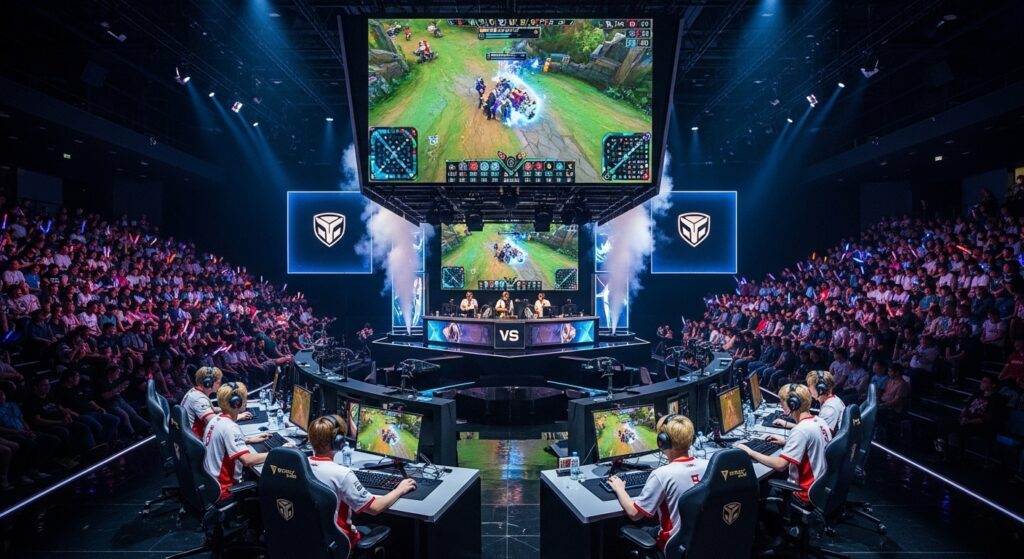
In the past decade, esports has undergone a dramatic transformation. Once viewed as a niche interest for a select group of gaming enthusiasts, it has now become a global phenomenon with millions of viewers, a multi-billion-dollar industry, and an ever-growing impact on mainstream culture. What was once just a pastime for a few competitive players has now turned into a legitimate sport, offering career opportunities, massive prize pools, and entertainment that rivals traditional sports. So, how did we get here? In this blog post, we’ll dive into the rise of esports, its global influence, and the future of competitive gaming.
The Birth of Esports: From Casual Gaming to Competition
Esports, or electronic sports, is the term used to describe organized, multiplayer video game competitions, particularly between professional players, teams, or organizations. While gaming competitions have existed for decades, the rise of esports began in the late 1990s and early 2000s, fueled by the increasing popularity of online multiplayer games. The most significant early example was StarCraft, a real-time strategy game that found massive success in South Korea, where esports culture was nurtured and grew.
In the years that followed, games like Warcraft III, Counter-Strike, Dota, and League of Legends began to shape the landscape of competitive gaming. These games not only allowed for players to compete at the highest levels but also provided a platform for fans to watch, cheer, and connect with others who shared their passion for gaming. This marked the beginning of esports as a global entity—more than just games, but full-fledged competitions with professional players, teams, and international tournaments.
The Global Expansion of Esports
As the internet improved and global connectivity became more accessible, esports grew exponentially. One of the key drivers behind this expansion was the rise of live streaming platforms like Twitch and YouTube Gaming. These platforms allowed gamers to broadcast their gameplay in real-time, attracting a massive global audience. Viewers could now tune in to watch their favorite players or teams compete, interact with the community, and learn from professional strategies—all from the comfort of their homes.
Major esports tournaments such as The International for Dota 2, the League of Legends World Championship, and Fortnite World Cup began attracting millions of viewers and multi-million-dollar prize pools. These events were broadcasted live to an ever-growing global audience, further propelling esports into the mainstream. The scale of these tournaments rivaled that of traditional sports events, with millions tuning in online and thousands attending live competitions.
Esports’ reach isn’t confined to just a few regions. While it started in North America and Asia, it has now spread across the globe. Europe, Latin America, and regions like the Middle East and Africa have all experienced rapid growth in esports viewership and participation. Local leagues, teams, and tournaments continue to pop up worldwide, making esports an accessible and engaging form of entertainment for diverse audiences.
Esports as a Career: Professional Players and Beyond
One of the most remarkable aspects of esports’ rise is the fact that it has opened up an entirely new career path for gamers. Just as professional athletes dedicate themselves to mastering physical sports, esports athletes now train rigorously to sharpen their skills, develop strategies, and prepare for high-stakes competitions. In fact, esports has grown to such a level that it is no longer unusual for players to sign contracts with esports organizations, representing them in global tournaments and leagues.
Top-tier esports players can earn substantial salaries, with sponsorship deals, prize winnings, and streaming income contributing to their financial success. The highest earners in esports, such as those who compete in Dota 2 or League of Legends, can bring home millions in a single year, thanks to large prize pools and corporate sponsorships.
But it’s not just players who benefit from this growing industry. Esports organizations employ coaches, analysts, broadcasters, and event managers, creating a range of professional opportunities beyond just playing the games. Many esports professionals now work full-time, participating in training camps, content creation, and even community-building activities. As the industry matures, opportunities for people in esports-related fields—such as marketing, game development, and event management—will continue to grow.
The Cultural Impact of Esports
Esports is much more than just a series of tournaments—it has become an integral part of global pop culture. With millions of fans following their favorite players and teams, esports has created communities and friendships that transcend geographical boundaries. Fans engage with each other through live streams, social media, and fan events, creating a sense of belonging and camaraderie that was once reserved for traditional sports fans.
Esports also represents a shift in the way we view entertainment. The traditional notion of sports was always tied to physical prowess and live attendance, but esports has proven that mental skill, strategy, and teamwork can equally captivate audiences. This change has been especially evident in how younger generations are consuming entertainment. For many, esports has become just as important as traditional sports, if not more so.
The success of esports is also reflected in its integration with other aspects of pop culture. Esports players are now recognized as celebrities, with sponsorships from major brands like Coca-Cola, Red Bull, and Adidas. Esports teams and players are often featured in commercials, and some even collaborate with music artists and fashion brands. Furthermore, esports’ influence can be seen in major events like E3 and Comic-Con, where game developers and esports organizations come together to celebrate gaming culture.
Challenges Within the Esports Industry
While esports has seen tremendous growth, it has not been without its challenges. One of the biggest issues facing the industry is player burnout. Competitive gaming demands hours of practice, intense focus, and constant pressure to perform at the highest level. Many players begin their careers in their teens, and by the time they reach their mid-20s, they may already be past their prime. This raises questions about long-term career sustainability for players and how the industry can support them through transitions.
Another concern is the mental and physical health of players. Prolonged hours in front of a screen can lead to eye strain, repetitive stress injuries, and poor posture. Mental health challenges, including anxiety and depression, are also becoming more common due to the stress of competition. As esports continues to grow, finding ways to support player health—both physically and mentally—will be essential for the industry’s sustainability.
Finally, there is the issue of inclusivity. The esports world, while diverse in many ways, is still largely male-dominated. There is growing pressure on the industry to promote diversity and create more opportunities for women and underrepresented groups in competitive gaming. Several initiatives and tournaments dedicated to empowering women and marginalized groups are already in motion, but there is still work to be done to ensure that esports is an inclusive and welcoming space for everyone.
The Future of Esports: What’s Next?
The future of esports looks incredibly bright, with numerous possibilities on the horizon. As technology advances, we can expect esports to evolve even further, especially with the rise of virtual reality (VR) and augmented reality (AR). These technologies have the potential to create entirely new ways for players and fans to interact, offering more immersive experiences for both competitors and spectators.
The integration of esports with traditional sports is also expected to continue. Major sports leagues such as the NBA and NFL have already recognized the potential of esports, and there are even discussions about including esports in the Olympics in the future. As esports continues to break down barriers between digital and physical competition, we can anticipate a more mainstream acceptance of esports as a legitimate sport.
Esports’ increasing role in education is another exciting development. Many universities and colleges now offer esports programs, providing scholarships for top players and courses focused on game design, team management, and broadcasting. This educational expansion will help nurture the next generation of esports professionals, ensuring the industry’s growth and longevity.
Conclusion: Esports is the Future of Entertainment
Esports has come a long way from its humble beginnings in basements and local LAN cafes. Today, it stands as a dominant force in the entertainment industry, offering thrilling competition, career opportunities, and cultural impact. As technology advances and the esports ecosystem expands, there is no doubt that competitive gaming will continue to grow and evolve. Whether you’re a player, a fan, or an industry professional, it’s clear that esports is more than just a trend—it’s the future of entertainment.




More Stories
Pixels to Podiums: The Rise of Esports as a Modern Sporting Power
Beyond the Screen: How Esports Is Redefining Competition, Culture, and Careers
Pixels to Glory: The Rise of Esports as a Global Sporting Powerhouse