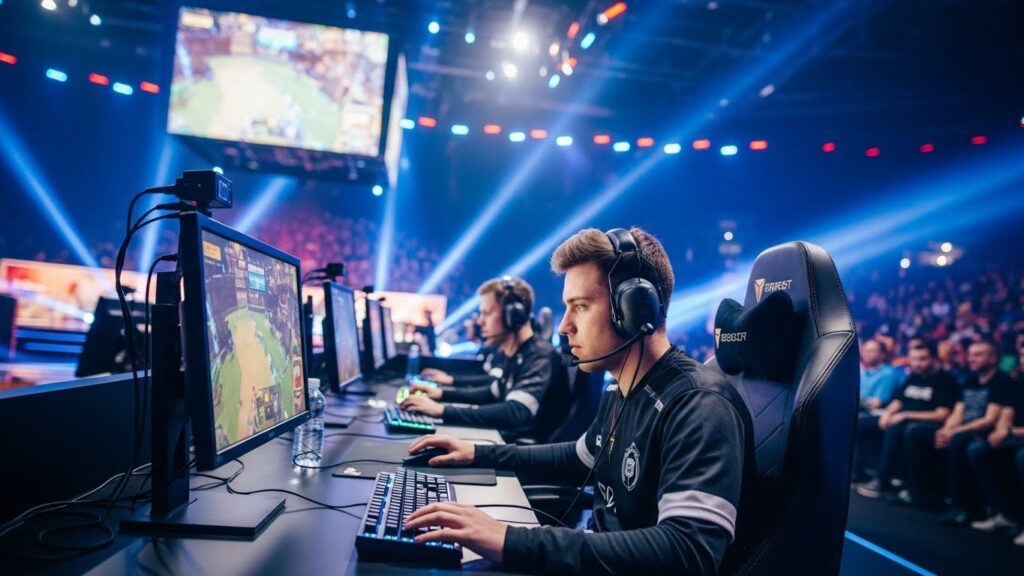
Esports, once considered a niche hobby limited to bedrooms and internet cafés, has grown into one of the most influential forms of competitive entertainment in the modern world. Today, professional gamers compete in packed arenas, millions watch live broadcasts, and entire careers are built around competitive gaming. Esports is no longer just about playing video games; it is a global industry that blends technology, strategy, culture, and competition into a powerful modern sport.
This blog explores how esports evolved, why it matters, and what makes it one of the fastest-growing phenomena of the digital age.
Understanding What Esports Truly Is
Esports, short for electronic sports, refers to organized competitive video gaming. Unlike casual gaming, esports involves structured competitions, professional teams, leagues, tournaments, and dedicated training routines. Players compete individually or in teams across a variety of game genres, including strategy games, first-person shooters, sports simulations, and multiplayer online battle arenas.
What separates esports from regular gaming is its competitive intensity. Matches are governed by rules, players are ranked, and outcomes have real consequences such as prize money, sponsorships, and professional recognition. Just like traditional sports, esports requires skill, discipline, preparation, and mental toughness.
The Early Days of Competitive Gaming
The roots of esports can be traced back several decades. In the early days of video games, competitions were informal and small-scale, often held in arcades or local gaming communities. Players competed for high scores, bragging rights, or simple prizes.
As technology improved and multiplayer gaming became more accessible, competitions began to grow. Local tournaments evolved into national events, and eventually international competitions emerged. The expansion of high-speed internet played a crucial role, allowing players from different parts of the world to compete in real time.
These early foundations set the stage for what would become a structured and professional global industry.
The Professionalization of Esports
One of the most significant turning points in esports history was its transition into a professional industry. Teams began forming with official rosters, coaches, and managers. Players started signing contracts, earning salaries, and representing organizations just like athletes in traditional sports.
Professional esports players follow strict schedules that include daily practice, strategy sessions, physical exercise, and mental conditioning. Tournaments now feature large prize pools, and winning a major event can be life-changing for players and teams.
The rise of professional leagues has brought stability and legitimacy to esports, helping it gain recognition as a serious competitive field.
Training and Skill in Esports
Contrary to outdated stereotypes, esports requires far more than fast reflexes. Top players must possess exceptional hand-eye coordination, game knowledge, strategic thinking, and teamwork. Decision-making often happens in fractions of a second, and a single mistake can cost an entire match.
Training involves analyzing gameplay footage, studying opponents, mastering mechanics, and refining communication within teams. Mental endurance is especially important, as matches can last for hours and tournaments can span multiple days.
Success in esports depends on consistency, adaptability, and the ability to perform under pressure.
The Role of Technology in Esports Growth
Technology is the backbone of esports. Powerful gaming hardware, advanced graphics, and reliable internet connectivity make competitive gaming possible at the highest level. Improvements in streaming technology have also allowed millions of fans to watch esports events live from anywhere in the world.
Game developers play a key role by designing titles that support competitive play, regular updates, and balanced gameplay. Broadcast tools, data analytics, and in-game statistics enhance both player performance and viewer understanding.
As technology continues to evolve, it will further shape how esports is played and experienced.
Esports as a Global Community
One of the most remarkable aspects of esports is its ability to unite people across borders. Players and fans come from different countries, cultures, and backgrounds, yet they share a common passion for competition and gaming.
Online platforms allow fans to interact with players, discuss strategies, and celebrate victories together. Esports communities are highly engaged, forming strong identities around teams, games, and personalities.
This sense of belonging is a major reason why esports resonates so strongly with younger generations.
Career Opportunities Beyond Playing
While professional players receive much of the spotlight, esports offers many career paths beyond competition. Coaches help teams develop strategies and improve performance. Analysts study gameplay data to identify strengths and weaknesses. Commentators and hosts bring excitement and storytelling to broadcasts.
There are also opportunities in event management, marketing, content creation, game development, and production. As the industry grows, the demand for skilled professionals continues to rise.
Esports has created an ecosystem where passion for gaming can turn into long-term careers.
Mental and Physical Health in Esports
Health is an increasingly important topic in esports. Long hours of practice and competition can take a toll on both mental and physical wellbeing. Issues such as stress, burnout, eye strain, and repetitive strain injuries are real concerns for professional players.
Many organizations now emphasize balanced lifestyles, encouraging proper sleep, exercise, and mental health support. Sports psychologists and fitness trainers are becoming common within teams, helping players maintain peak performance.
Recognizing and addressing health challenges is essential for the sustainable growth of esports.
Esports and Education
Educational institutions around the world are beginning to embrace esports. Schools and universities offer esports programs, scholarships, and competitive teams. These initiatives recognize the skills esports develops, such as teamwork, strategic thinking, communication, and problem-solving.
Students involved in esports often gain experience in leadership, time management, and technology. Educational esports programs also help legitimize competitive gaming and provide structured pathways into the industry.
The connection between education and esports continues to strengthen as acceptance grows.
Challenges Facing the Esports Industry
Despite its success, esports faces several challenges. Regulation remains inconsistent across regions, and player contracts can vary widely in quality and protection. Ensuring fair competition and preventing cheating is an ongoing effort.
Another challenge is inclusivity. While esports is open to everyone, certain groups remain underrepresented. Creating welcoming environments and equal opportunities is necessary for the industry’s long-term health.
Public perception also continues to evolve, as esports works to establish itself alongside traditional sports in mainstream culture.
The Future of Esports
The future of esports is full of potential. New games, formats, and technologies will continue to reshape the competitive landscape. Virtual reality, cloud gaming, and artificial intelligence may introduce entirely new ways to compete and spectate.
Esports is likely to become even more integrated with entertainment, education, and traditional sports. As infrastructure improves and audiences expand, esports will continue its rise as a dominant force in global competition.
What was once a hobby is now a defining element of digital culture.
Esports as a Cultural Movement
Beyond competition, esports influences music, fashion, language, and online culture. Players become icons, teams build loyal fanbases, and gaming moments become part of shared digital history.
Esports represents how modern culture values connectivity, creativity, and innovation. It challenges traditional ideas of what a sport can be and reflects how technology shapes human interaction.
This cultural impact ensures that esports is not just a trend, but a lasting movement.
Conclusion: A New Era of Competition
Esports has transformed from simple pixel-based games into a global sporting phenomenon. It demands skill, discipline, and intelligence while offering excitement, community, and opportunity. Its influence stretches across industries, generations, and cultures.
As esports continues to grow, it will redefine competition in the digital age. It stands as proof that passion combined with technology can create something powerful, inclusive, and inspiring.
Esports is no longer the future. It is the present, and its journey has only just begun.



More Stories
Beyond the Screen: How Esports Is Redefining Competition, Culture, and Careers
Pixels to Glory: The Rise of Esports as a Global Sporting Powerhouse
Beyond the Screen: How Esports Became the New Global Arena