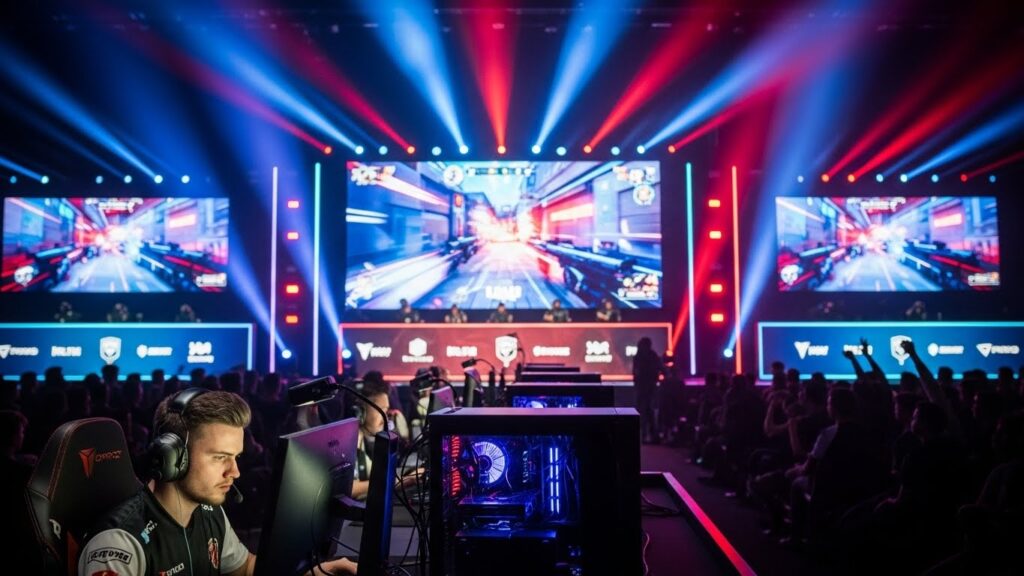
Esports, or competitive gaming, has emerged as one of the most influential cultural phenomena of the 21st century. Once dismissed as a niche hobby, esports has now become a multi-billion-dollar industry, drawing millions of spectators, inspiring professional careers, and transforming the way people perceive competition and entertainment. Unlike traditional sports, esports exists in a fully digital realm, yet it demands a combination of skill, strategy, teamwork, and mental resilience that rivals any physical sport. This blog explores the evolution of esports, its impact on society, the economics behind it, and what the future holds for this dynamic industry.
The Rise of Esports: From Arcades to Global Arenas
The origins of esports can be traced back to the 1970s and 1980s when video games began gaining popularity in arcades and home consoles. Early titles like Pong and Space Invaders were primarily recreational, but they laid the foundation for competitive gaming by fostering friendly rivalries and high-score challenges. By the 1990s, networked multiplayer games such as Doom, Quake, and StarCraft allowed players to compete over local networks or online, creating the first gaming communities that shared strategies and hosted small-scale tournaments.
South Korea played a pivotal role in the rise of esports, particularly in the late 1990s and early 2000s. With games like StarCraft, professional leagues emerged, players became household names, and competitions were broadcast on television. This professionalization of gaming set the precedent for esports as a serious and lucrative endeavor. Today, esports tournaments fill massive arenas and attract millions of online viewers worldwide, showing just how far competitive gaming has come.
Understanding the Popularity of Esports
Esports owes its popularity to accessibility, entertainment value, and a sense of community. Unlike traditional sports, esports does not require physical prowess or expensive equipment to start. A computer, gaming console, or even a smartphone is sufficient for beginners to join competitive environments. This accessibility allows players from all over the world to participate and improve their skills without geographical restrictions.
Streaming platforms have also revolutionized esports by making competitions accessible to global audiences. Fans can watch live tournaments, interact with players, and engage with online communities. The rise of influencers and professional gamers has created a new kind of celebrity culture, where players inspire fans and motivate younger generations to pursue careers in gaming or streaming. The combination of accessibility, community engagement, and entertainment makes esports uniquely appealing.
The Professional Side of Esports
Professional esports requires rigorous dedication, discipline, and strategy. Top-level players often practice for eight to twelve hours daily, studying game mechanics, analyzing opponents, and refining strategies. Unlike casual gaming, professional esports is highly structured, often involving coaching staff, analysts, nutritionists, and psychologists to optimize performance. This level of professionalism demonstrates that esports is not just entertainment but a serious career path.
Teams and organizations provide contracts, salaries, and sponsorships to players, ensuring financial stability while fostering competitive excellence. Beyond playing, esports offers careers in coaching, event management, content creation, and broadcasting. Analysts study gameplay to develop winning strategies, while commentators bring excitement and context to matches. The professional ecosystem of esports is a complex and well-established network, reflecting the industry’s maturity and growth.
Cognitive and Psychological Benefits of Esports
Esports challenges the brain in unique ways. Competitive gaming demands fast decision-making, problem-solving, strategic planning, and multitasking. Players must process vast amounts of visual and auditory information in real time, anticipate opponents’ actions, and adapt strategies instantly. Studies suggest that these mental demands can enhance cognitive abilities, improve memory, and sharpen reflexes.
However, esports also presents psychological challenges. High-pressure environments, long practice hours, and public scrutiny can lead to stress, burnout, and anxiety. Recognizing this, professional organizations now integrate mental health programs, including counseling, stress management workshops, and wellness initiatives. Physical fitness and proper nutrition are also emphasized, reflecting the importance of a holistic approach to peak performance in esports.
Economic Impact of Esports
The economic significance of esports is enormous. Tournaments, sponsorships, media rights, merchandising, and digital streaming contribute to billions of dollars in revenue annually. Major competitions like the League of Legends World Championship or Dota 2’s The International feature prize pools rivaling traditional sports events, sometimes reaching tens of millions of dollars.
The economic benefits extend beyond players and competitions. Hardware manufacturers, software developers, media companies, and advertisers all participate in the esports ecosystem. Countries are investing in esports infrastructure, such as stadiums and training facilities, to attract international events and stimulate tourism. The growth of esports demonstrates how digital entertainment can create significant economic opportunities and jobs across multiple industries.
Esports as a Cultural Phenomenon
Esports has transcended the gaming community to become a global cultural force. Unlike traditional sports, esports connects fans from every corner of the world through online platforms, creating a global community united by passion and shared experiences. Tournaments become social events, with fans celebrating victories, sharing strategies, and following the careers of favorite players.
Cultural diversity is also reflected in esports. Different regions develop unique playstyles and strategic approaches, enriching the competitive landscape. South Korean players are known for precision and discipline, Western players often emphasize creativity and adaptability, and Chinese teams are recognized for coordination and innovation. This global exchange highlights esports as a space where diverse strategies and cultures converge, fostering mutual respect and understanding.
Technology Driving Esports Forward
Technology is central to esports, from game design and graphics to live streaming and analytics. Streaming platforms like Twitch and YouTube Gaming allow millions of fans to watch tournaments in real time, interact with players, and build vibrant communities. Artificial intelligence and analytics help teams study opponents, optimize strategies, and enhance training. Virtual reality and augmented reality are beginning to provide immersive experiences for both players and spectators, further blurring the line between digital and physical entertainment.
Technological innovation ensures that esports remains dynamic and continuously evolving. Cloud gaming, mobile platforms, and improved network infrastructure expand accessibility, allowing more people to participate in competitive gaming. The integration of technology into every aspect of esports—from gameplay to fan engagement—is a key driver of the industry’s rapid growth.
Esports in Education
Esports is increasingly recognized as a valuable tool in education. Schools and universities are introducing esports programs and scholarships, acknowledging its potential to develop critical thinking, teamwork, and strategic planning skills. Student players learn to balance academic responsibilities with rigorous practice schedules, gaining time management and discipline that translate into real-world skills.
Esports also promotes inclusivity and engagement among students. By creating clubs, teams, and competitions, educational institutions provide students from diverse backgrounds opportunities to develop leadership skills, connect socially, and explore career paths in gaming, technology, and media. This educational integration highlights esports as more than a hobby—it is a platform for learning, personal growth, and career development.
Challenges Facing the Esports Industry
Despite its rapid rise, esports faces several challenges. Player health and well-being remain critical concerns due to long periods of practice and sedentary lifestyles. Regulation and standardization are ongoing issues, as tournaments, contracts, and age restrictions vary widely across regions. Furthermore, traditional perceptions of gaming as “non-serious” work still persist in some areas, limiting social acceptance and support.
Diversity and inclusion are also challenges within esports. Female players and marginalized groups are underrepresented, though organizations are working to create equal opportunities and mentorship programs. Addressing these challenges is essential for sustaining the growth and legitimacy of esports globally.
The Future of Esports
The future of esports is promising, driven by technology, increasing global recognition, and broader accessibility. Mobile gaming, cloud platforms, virtual reality, and augmented reality will continue to transform how esports is played and consumed. As tournaments expand and prize pools grow, professional esports will become an even more viable career option.
Mental health, wellness, and inclusivity will play a critical role in shaping the industry. Esports will likely integrate further with traditional sports, entertainment, and education, creating hybrid experiences that appeal to wider audiences. The continued evolution of esports promises to redefine competition, entertainment, and digital culture for generations to come.
Conclusion
Esports has evolved from arcade competitions to a global digital arena that combines skill, strategy, and entertainment. It has transformed into a professional, cultural, and economic force, connecting millions of players and fans worldwide. Beyond the screen, esports teaches discipline, teamwork, and cognitive skills while creating opportunities for careers, education, and innovation.
The rise of esports reflects the changing landscape of competition and entertainment in the digital age. It is not just a game; it is a community, a career path, and a cultural phenomenon. As technology advances and global interest grows, esports will continue to push the boundaries of what it means to compete, entertain, and connect in a world that increasingly values digital engagement.



More Stories
Pixels to Podiums: The Rise of Esports as a Modern Sporting Power
Beyond the Screen: How Esports Is Redefining Competition, Culture, and Careers
Pixels to Glory: The Rise of Esports as a Global Sporting Powerhouse